How to Use Amino Acid Surfactant for Effective Skincare Solutions?
In the realm of skincare, understanding ingredients is crucial for effective solutions. Amino Acid Surfactants emerge as powerful agents in this field. Renowned skincare expert Dr. Emily Chen emphasizes, "Amino Acid Surfactants provide gentle cleansing without stripping skin's natural moisture." This highlights their unique role in balancing efficacy and gentleness.
The structure of Amino Acid Surfactants offers benefits beyond mere cleansing. They create a creamy lather and are ideal for sensitive skin types. Products infused with these ingredients often lead to smoother textures and improved hydration. However, not all formulations utilize them effectively. It is essential to research and choose products wisely.
Consumers might overlook the importance of ingredient combinations. Not every product labeled with amino acids delivers optimal results. Some may fall short due to additional harsh substances. This calls for a more discerning approach. Recognizing the worth of Amino Acid Surfactants can elevate one’s skincare routine. Your skin deserves thoughtful care and consideration in ingredient choices.

Understanding Amino Acid Surfactants and Their Role in Skincare
Amino acid surfactants are gentle yet effective ingredients in skincare. They derive from natural sources and mimic the body's own building blocks. These surfactants help cleanse the skin without stripping away essential moisture. They create a rich, creamy lather that feels luxurious. Unlike harsher surfactants, they maintain skin’s natural barrier.
In formulations, amino acid surfactants can be found in cleansers and creams. They help to remove dirt, oil, and impurities. Users often notice softer skin after regular use. However, results may vary among individuals. Some might find them less effective than traditional options. It's crucial to test and observe how your skin responds.
Choosing the right product with amino acid surfactants can be tricky. Not all products work the same way for everyone. Pay attention to the formulation and check for other nourishing ingredients. Monitoring skin reactions is important. You may need to adjust your routine over time. Embrace the journey of understanding how these surfactants impact your skin.
How to Use Amino Acid Surfactant for Effective Skincare Solutions?
| Aspect |
Details |
| What are Amino Acid Surfactants? |
Amino acid surfactants are mild cleaning agents derived from amino acids, beneficial for the skin. |
| Benefits in Skincare |
They help maintain skin barrier, provide hydration, and are suitable for sensitive skin. |
| Common Uses |
Used in cleansers, shampoos, and moisturizers for their gentle cleansing properties. |
| How to Incorporate? |
Look for products with amino acid surfactants in the ingredient list to integrate them into your routine. |
| Examples |
Examples include Sodium Cocoyl Isethionate and Disodium Cocoyl Glutamate. |
| Considerations |
Patch test new products and consult a dermatologist if unsure about allergies. |
Benefits of Using Amino Acid Surfactants in Skincare Products
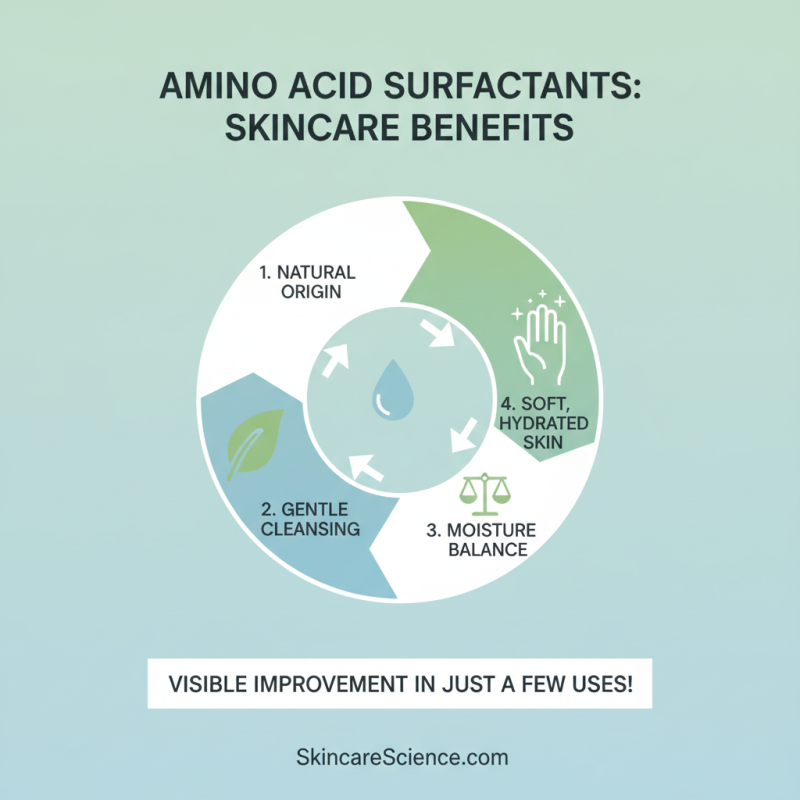
Amino acid surfactants offer numerous benefits for skincare products. These gentle cleansers are derived from natural sources. They help maintain the skin’s moisture balance. Using them can lead to softer, more hydrated skin. Many people notice a difference after just a few uses.
One significant advantage is their mildness. Unlike harsher ingredients, amino acid surfactants do not strip the skin. They cleanse without causing irritation, making them suitable for sensitive skin types. However, results can vary based on individual skin responses. It’s essential to test any new product on a small area first.
Moreover, these surfactants can enhance product performance. They often create a creamy lather that feels luxurious. The texture can make the cleansing experience more enjoyable. Many users appreciate this aspect. Still, one should consider if the product feels right during use. Observing how your skin reacts over time is crucial.
How to Choose the Right Amino Acid Surfactant for Your Skin Type
Choosing the right amino acid surfactant for your skin type can be tricky. Not all skin types are the same. For those with dry skin, look for surfactants that are gentle and hydrating. Ingredients like glycine or proline work well. They help maintain moisture while cleansing. You might notice a difference in how your skin feels after washing.
For oily or acne-prone skin, stronger surfactants are often better. You might consider surfactants that have a deeper cleansing ability. However, be cautious. Too strong, and you can strip away natural oils. Look for ingredients like alanine or serine. They cleanse effectively but are less drying than harsher options.
Sensitive skin reacts easily. A gentle amino acid surfactant is crucial. You may want to test a patch first. Some people have unexpected reactions to new ingredients. Look for those that soothe while cleansing. Not everything works for everyone. Be ready to adjust based on how your skin responds.
Effectiveness of Amino Acid Surfactants Based on Skin Type
This chart illustrates the satisfaction levels of various skin types using amino acid surfactants. As observed, sensitive skin tends to have the highest satisfaction, while combination skin shows a lower responsiveness to these surfactants.
Application Techniques for Effective Use of Amino Acid Surfactants
Amino acid surfactants are gentle cleansing agents. They can effectively remove dirt without stripping the skin's natural oils. To use them effectively, consider your skin type before selection.
If you have dry skin, a milder formulation is ideal. For oily skin, a slightly stronger product may work better.
Application is key for success. Start by dampening your face with water. Use a small amount of the surfactant, about the size of a pea. Gently massage it into your skin in circular motions. Avoid harsh scrubbing; let the product do the work. Rinse thoroughly with lukewarm water to ensure no residue remains.
Remember to listen to your skin. If you notice dryness or irritation, reduce usage. Daily application may not suit everyone. Experiment with frequency to find what works best for your skin. Keep track of how your skin reacts over time. Often, adjustments are necessary to achieve the desired results.
Safety Precautions and Considerations When Using Amino Acid Surfactants
Amino acid surfactants are gaining popularity in skincare, but safety remains crucial. These compounds often come from natural sources. They are considered milder than traditional surfactants, which is a significant advantage. However, potential skin irritation is still a concern for some users. Studies show that over 20% of skincare users report allergic reactions. Always patch test new products on a small area before full application.
When using amino acid surfactants, consider your skin type. Dry or sensitive skin may react differently. A study found that 30% of users with sensitive skin experienced discomfort. It’s essential to monitor your skin’s reaction when introducing new ingredients. Remember that what works for one person may not work for another.
Tips: Always read labels for additional ingredients. Avoid products with artificial additives when possible. Hydrating after cleansing may help alleviate dryness. Also, never ignore signs of irritation. Adjust your routine based on how your skin feels.