Top 10 Benefits and Uses of Cationic Surfactant You Should Know
Cationic surfactants play a crucial role in various industries. Their unique properties enable them to improve product performance and user experience. According to a recent market report by Statista, the cationic surfactant market is projected to reach USD 3.8 billion by 2025. This growth highlights their significant applications in personal care, textiles, and household cleaning products.
Dr. Emily Carter, a renowned expert in surfactant technology, stated, "Cationic surfactants are key ingredients that enhance stability and effectiveness in formulations." Despite their advantages, challenges remain. Some products can cause skin irritation or environmental issues if not properly formulated.
Understanding the benefits and uses of cationic surfactants is essential for manufacturers and consumers alike. As we delve into the top ten benefits, it's essential to identify the balance between efficacy and safety. Cationic surfactants continue to evolve, reflecting both innovation and the need for responsible use.

Understanding Cationic Surfactants: A Comprehensive Overview
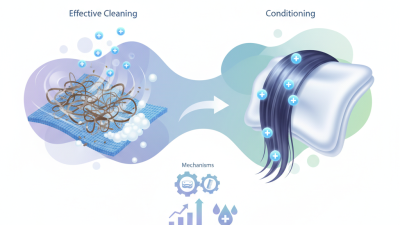
Cationic surfactants are chemical compounds that carry a positive charge. They are widely used in various industries due to their unique properties. These substances excel in reducing surface tension. As a result, they enhance cleaning and conditioning. Their positive charge makes them effective at binding with negative surfaces, such as dirt and grime.
In personal care products, cationic surfactants are prevalent. They improve the texture of hair and skin. They can make products feel creamy and luxurious. However, using high concentrations can lead to residue buildup. This might leave hair feeling weighed down or greasy. Users should experiment with different formulations to find the right balance.
In industrial applications, cationic surfactants play a crucial role. They are used in water treatment and fabric softeners. These applications highlight their ability to interact with various materials. Still, not all formulations work equally well. Users need to assess their specific requirements. Understanding the properties of cationic surfactants can lead to better choices in formulation.
Key Characteristics of Cationic Surfactants and Their Chemical Structure
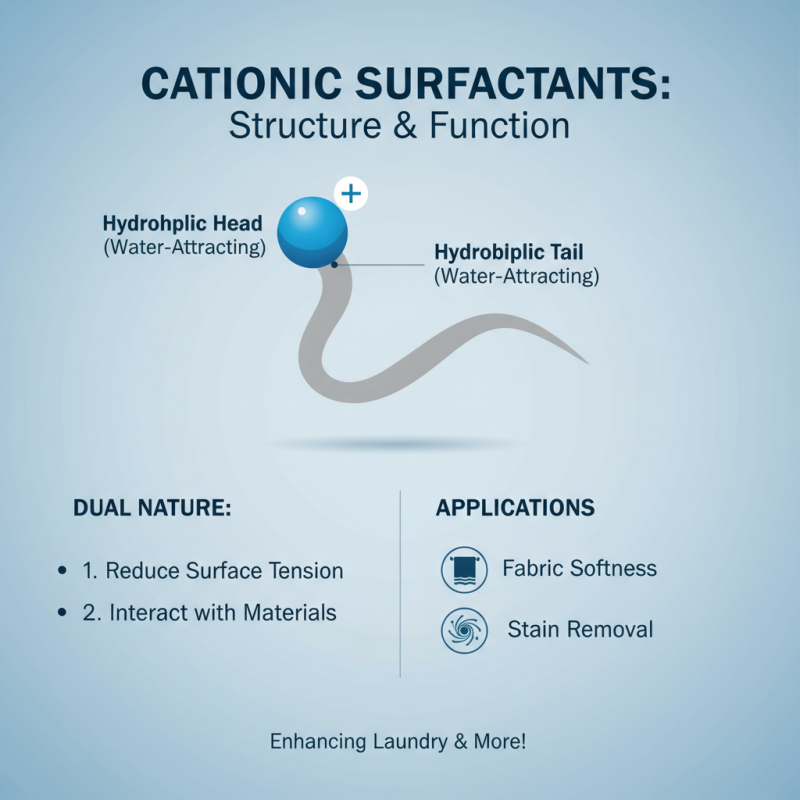
Cationic surfactants possess unique chemical structures that enhance their functionality. These compounds typically feature a hydrophilic (water-attracting) head and a hydrophobic (water-repelling) tail. This dual nature allows them to reduce surface tension effectively and interact with various materials. Recent studies highlight that cationic surfactants can significantly improve fabric softness and stain removal capabilities, making them popular in laundry products.
The molecular configuration of cationic surfactants is vital for their performance. For instance, the nitrogen atom in the head is positively charged, allowing it to bond with negatively charged surfaces, such as dirt and oily stains. According to data from the Journal of Surfactants and Detergents, these surfactants are effective in concentrations as low as 0.1%, showcasing their efficiency. However, not all users may experience the same results due to variations in formulation and usage conditions.
Cationic surfactants also influence microbial activity. Their positive charge can disrupt microbial membranes, granting them antibacterial properties. A report from the American Chemical Society notes that specific formulations can reduce certain bacterial populations by over 90% within minutes. Yet, over-reliance on these surfactants might lead to potential resistance issues. Balancing effectiveness and safety is essential for future applications.
Top Applications of Cationic Surfactants in Various Industries
Cationic surfactants play a vital role in various industries. They are commonly used in personal care products such as shampoos and conditioners. Their ability to bind to hair makes them effective in providing moisture and reducing static. In household cleaning products, they enhance the cleaning power and leave surfaces gleaming. The use of cationic surfactants can significantly improve the user experience.
In the textile industry, these surfactants help in anti-static and softening finishes. They can also enhance dye uptake in fabrics. This leads to brighter colors and improved fabric quality. However, their application must be carefully managed. Overuse may lead to residues that could irritate sensitive skin.
Cationic surfactants also find utility in agriculture. They aid in pesticide formulations, improving chemical adhesion to plant surfaces. This can enhance effectiveness but requires proper dosage to avoid plant toxicity. Balancing effectiveness with safety is often a challenge. Each industry must continually assess the impact of cationic surfactants to ensure safe and effective use.
The Role of Cationic Surfactants in Personal Care Products and Cosmetics
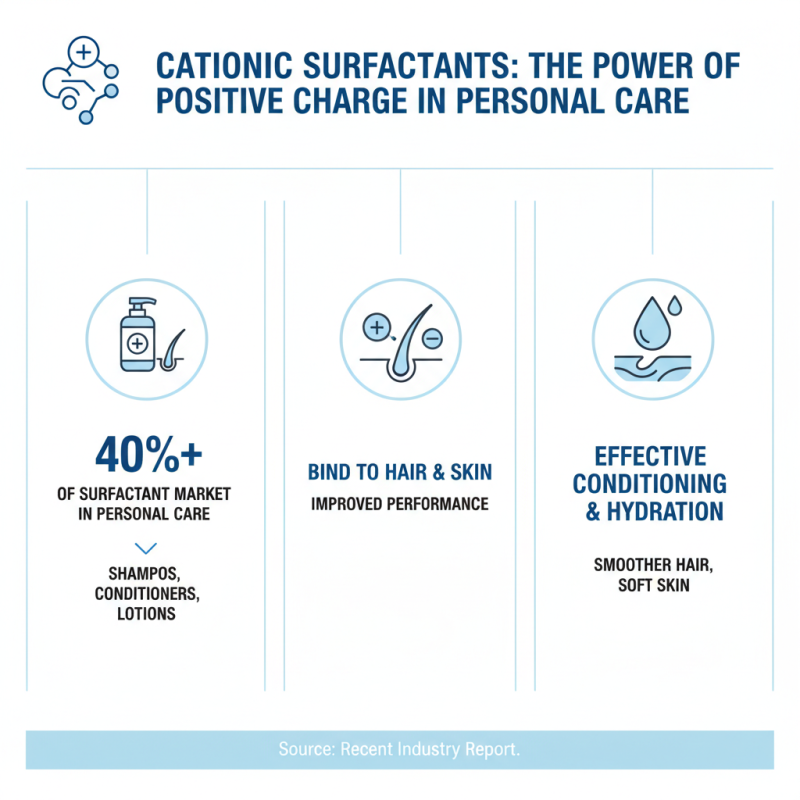
Cationic surfactants play a vital role in personal care products and cosmetics. They help improve the performance of shampoos, conditioners, and lotions. According to a recent industry report, cationic surfactants represent over 40% of the surfactant market in personal care. Their positive charge binds to negatively charged hair and skin surfaces, ensuring effective conditioning and hydration.
These surfactants offer several benefits. They enhance the stability of emulsions and improve the texture of creams. In addition, they can reduce static electricity in hair, making it easier to manage. However, it’s essential to note that overuse can lead to buildup. This may weigh hair down or irritate sensitive skin.
**Tip:** When using products with cationic surfactants, look for those labeled "lightweight." This can help prevent heaviness.
Cationic surfactants also aid in antimicrobial properties. This is beneficial in products like hand sanitizers and personal hygiene items. Despite their benefits, formulators should be cautious. Too much can lead to unwanted effects.
**Tip:** Check ingredient lists and avoid excessive use for better results. Regularly varying products can help maintain hair and skin health.
Environmental Impacts and Safety Considerations of Cationic Surfactants
Cationic surfactants are widely used in various industries, but their environmental impact raises concerns. These substances can accumulate in aquatic systems, affecting organisms. Their positive charge gives them a strong affinity for negatively charged surfaces, including cell membranes. This can disrupt microbial communities in water bodies.
When using cationic surfactants, consider their potential toxicity. They can harm beneficial bacteria and lead to imbalances in ecosystems. It’s essential to review the concentration levels when formulating products. Even small amounts can have significant consequences.
Tips: Always read labels to understand ingredient safety. Look for eco-friendly alternatives when possible. Engage in responsible disposal methods to reduce environmental risks. Awareness is key to mitigating impact while enjoying the benefits these surfactants offer. Remember, moderation is crucial in all applications.