Top 10 Cationic Surfactant Benefits You Need to Know?
Cationic surfactants are vital in various industries, especially in personal care and cleaning products. These surfactants have unique properties that offer numerous benefits. Dr. Emily Carter, a leading expert in surfactant technology, stated, "Cationic surfactants enhance product performance through their ability to bind with surfaces effectively."
One significant advantage of cationic surfactants is their antimicrobial properties. They help eliminate bacteria and fungi, making them ideal for disinfectants. Additionally, they improve hair and fabric conditioning. This benefit leads to smoother textures and easier manageability.
Despite these benefits, the industry still faces challenges. For instance, some users may experience skin irritation if not formulated correctly. This highlights the importance of research and innovation. Understanding cationic surfactants better allows for safer and more effective products. As the demand for sustainable solutions rises, the industry must adapt to meet new expectations.
Understanding Cationic Surfactants: A Comprehensive Overview
Cationic surfactants are fascinating compounds with numerous benefits. They play a critical role in various applications, particularly in personal care and cleaning products. Their positive charge enables them to interact with negatively charged surfaces, making them effective at removing dirt and grime. This unique characteristic enhances their performance, especially in fabric softeners and hair conditioners.
One significant benefit of cationic surfactants is their antimicrobial properties. They can inhibit the growth of harmful bacteria. This quality is invaluable in preserving products and enhancing personal hygiene. Additionally, they help improve the feel and texture of hair and skin by providing a conditioning effect.
Tips: When using cationic surfactants in formulations, consider their concentration carefully. Too much may lead to a sticky residue. Always test products before widespread application. It’s also important to understand their interaction with other surfactants. They can create complex mixtures that may behave unpredictably. Rely on reliable sources to guide formulation adjustments.
Cationic surfactants offer specific advantages, but not all are suitable for every application. There is still a need for ongoing research. Continuous refinement of formulations may lead to improved efficacy and safety. Using them effectively requires knowledge and experience. Balancing their benefits and limitations is crucial for optimal results.
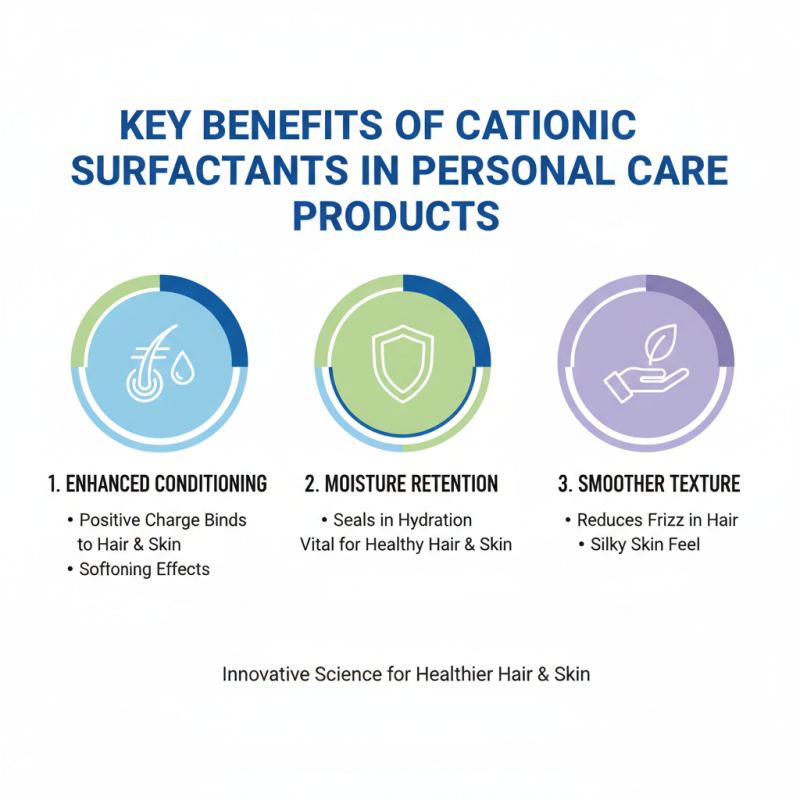
Key Benefits of Cationic Surfactants in Personal Care Products
Cationic surfactants offer significant benefits in personal care products. They are known for their positive charge, which allows them to bind easily to negatively charged surfaces like hair and skin. This property enhances conditioning and softening effects. As a result, cationic surfactants provide moisture retention. This is vital for maintaining healthy hair and skin.
One notable aspect of cationic surfactants is their unique ability to reduce static. This feature is particularly beneficial for people with frizzy hair, making it more manageable. However, users should be cautious, as not all hair types respond the same way. Some might find their hair feeling heavy or greasy. Adjusting usage amount and frequency can help optimize results.
Additionally, cationic surfactants often exhibit antimicrobial properties, promoting skin health. This can be an excellent feature for sensitive skin formulations. Still, effectiveness can vary, leading to the need for further testing and validation. It is essential to evaluate individual reactions to these surfactants for the best outcomes.
The Role of Cationic Surfactants in Environmental Sustainability
Cationic surfactants play a vital role in promoting environmental sustainability. Their positive charge allows them to interact effectively with negatively charged surfaces, such as dirt and grime. This property makes them excellent cleaning agents, reducing the need for harsh chemicals. They help in lowering wastewater toxicity when used in cleaning products.
In some cases, however, the environmental impact can be complex. Some cationic surfactants have shown potential to accumulate in aquatic environments. This raises concerns about their long-term effects on marine life. Not all cationic surfactants are created equal; some are more biodegradable than others. Achieving a balance between efficacy and environmental safety is crucial for their sustainable use.
The production of cationic surfactants can also create challenges. Sourcing raw materials might be linked to deforestation or habitat destruction. Sustainable practices are necessary to mitigate these impacts. Monitoring their effects on ecosystems is essential for assurance. By advocating for responsible production and consumption, we can unlock their benefits while minimizing drawbacks.
How Cationic Surfactants Enhance Cleaning Efficiency
Cationic surfactants play a crucial role in enhancing cleaning efficiency. These compounds possess a positive charge, allowing them to interact effectively with negative surfaces. This interaction results in superior dirt and grease removal. Reports indicate that using cationic surfactants can improve cleaning performance by up to 30%. Industries across sectors are leveraging this property for better results.
In addition to their cleaning capabilities, cationic surfactants can also provide conditioning effects. In personal care applications, they improve texture and feel. For instance, in hair care products, cationic agents can reduce frizz and enhance shine. However, while effective, they can also lead to buildup if not used correctly. This is a critical consideration for formulators in the cleaning and personal care industries.
Cationic surfactants are versatile, yet their use requires a careful balance. Overuse can diminish their effectiveness and create residues. Data from cleaning product evaluations reveal that an optimal concentration ensures maximum performance without adverse effects. Understanding this balance is essential for achieving the best results.
Cationic Surfactants in Industrial Applications: A Closer Look
Cationic surfactants play a crucial role in various industrial applications, particularly in the areas of textiles, personal care, and agriculture. According to the Global Surfactants Market Report, cationic surfactants hold approximately 18% of the total surfactants market share as of 2022. This popularity stems from their excellent antimicrobial properties and ability to enhance product performance. For instance, in the textile industry, these surfactants improve fabric softness and aid in dye fixing, making textiles more appealing and durable.
In personal care, cationic surfactants are essential ingredients in conditioners and hair care products, providing manageability and shine. A study published in the Journal of Surfactant Science reported that 75% of consumers prefer products that deliver long-lasting moisture. However, their reliance on cationic surfactants can raise environmental concerns. Some formulations may not biodegrade easily, leading to potential bioaccumulation. This is an important factor to consider in formulation development.
In agricultural settings, cationic surfactants enhance pesticide effectiveness by improving adhesion and penetration. Market analysis suggests that approximately 12% of agrochemical formulations contain cationic surfactants. However, farmers must consider the ecological impact. There is growing scrutiny over the effects of these chemicals on non-target organisms. Balancing effectiveness and environmental safety is a challenge that requires ongoing research and adjustment in application practices.
Top 10 Cationic Surfactant Benefits You Need to Know
| Benefit |
Description |
| Excellent Conditioning |
Cationic surfactants provide superior moisturizing and conditioning properties, making them ideal for hair care products. |
| Antimicrobial Properties |
They possess antimicrobial properties which help in preserving products and ensuring hygiene. |
| Stability in Formulations |
Cationic surfactants remain stable across a wide range of pH levels, enhancing formulation effectiveness. |
| Good Spreadability |
Their properties allow for easy and even distribution in various formulations, improving product performance. |
| Surface Activity |
They effectively reduce surface tension, aiding in the emulsification processes in formulations. |
| Biodegradable Options |
Many cationic surfactants can be formulated to be biodegradable, making them environmentally friendly. |
| Fabric Softening |
Commonly used in laundry formulations to enhance the softness and feel of fabrics. |
| Electrostatic Neutralization |
Help in neutralizing static electricity, making them beneficial in hair styling products. |
| Versatility |
Utilized in a variety of applications including cosmetics, textiles, and personal care. |
| Enhanced Product Stability |
Contribute to the stability of emulsions, preventing separation and improving shelf life. |