How to Choose the Best Grease Moisturizing Products for Your Skin
Choosing the right grease moisturizing products for your skin can significantly impact your skincare routine and overall skin health. With countless options available on the market, it can be overwhelming to determine which products will provide the best benefits for your unique skin type and concerns. Grease moisturizing formulations are designed to create a barrier that retains moisture, making them particularly valuable for individuals with dry, sensitive, or mature skin.
In this guide, we will explore essential factors to consider when selecting the best grease moisturizing products. From understanding the ingredients that offer maximum hydration to recognizing the importance of your skin's specific needs, our aim is to equip you with the knowledge to make informed choices. By focusing on quality over quantity, you can ensure that your skincare regimen not only nourishes but also protects your skin, leading to a healthier and more radiant complexion. Ultimately, embracing the right grease moisturizing products can transform your skin and enhance your confidence in your appearance.
Understanding Your Skin Type and Hydration Needs
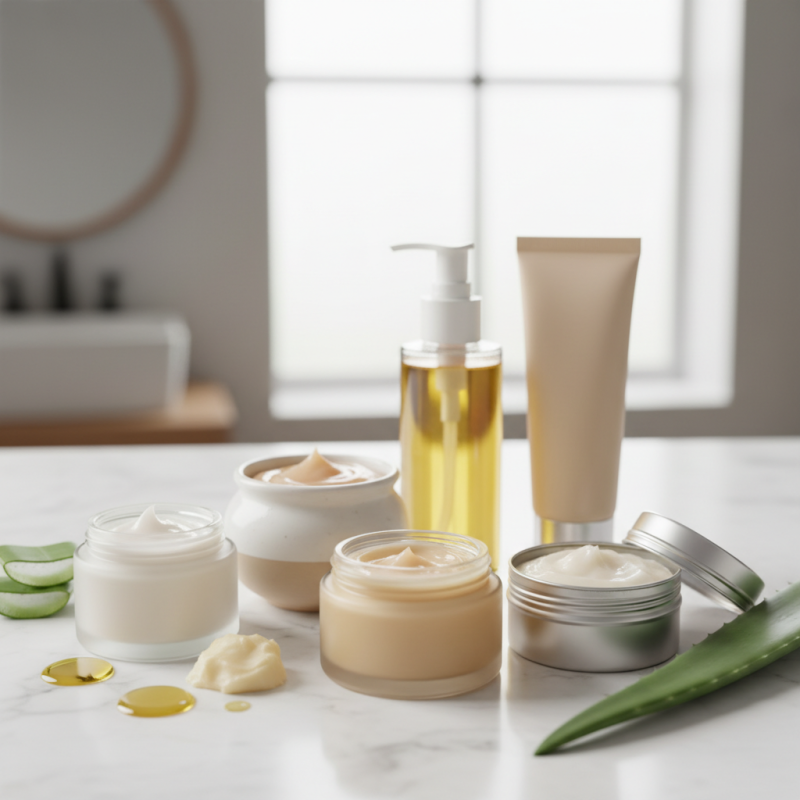
When selecting the best grease moisturizing products for your skin, understanding your specific skin type and hydration needs is paramount. Different skin types—such as dry, oily, or combination—require targeted approaches to achieve optimal hydration without compromising skin health. For instance, individuals with dry skin may benefit from richer oils that provide intensive moisture, while those with oily skin should seek lightweight formulations that hydrate without adding excess shine.
**Tips for Choosing Moisturizers:**
1. **Know Your Skin Type**: Conduct a simple test by observing how your skin feels after cleansing. If it tightens or feels rough, lean towards heavier, oil-based products. Conversely, if your skin feels oily even after cleansing, a lightweight, non-comedogenic moisturizer is likely a better choice.
2. **Read Ingredients Carefully**: Look for ingredients like hyaluronic acid, glycerin, or ceramides that promote hydration. Avoid products high in alcohol, which can exacerbate dryness in the long term.
3. **Consider Seasonal Needs**: Your skin’s hydration requirements may change with the seasons. During winter, opt for thicker creams or oils to combat dryness, while lighter gels may suffice in warmer months.
By aligning product choices with individual hydration needs and skin types, you can enhance your skincare routine effectively.
Key Ingredients to Look for in Grease Moisturizing Products
When selecting the best grease moisturizing products for your skin, it's crucial to focus on key ingredients that cater specifically to oily and combination skin types. Dermatologists emphasize the importance of using products that contain hydrating agents without adding excess shine. Look for oil-free moisturizers that feature lightweight textures such as hyaluronic acid, glycerin, and aloe vera. These ingredients not only provide hydration but also help retain moisture without clogging pores, making them ideal for oily skin types.
Recently, industry reports have noted a trend toward gel-based and water creams, which are increasingly popular among consumers seeking hydration without greasiness. These products often incorporate potent ingredients like niacinamide and green tea extract, known for their soothing and anti-inflammatory properties. According to a study published in a dermatological journal, utilizing serums enriched with these ingredients can significantly enhance skin hydration levels while controlling sebum production. Prioritizing these key components can lead to a balanced complexion, where hydration meets oil control effectively.
Evaluating Product Formulations: Balms, Creams, and Ointments
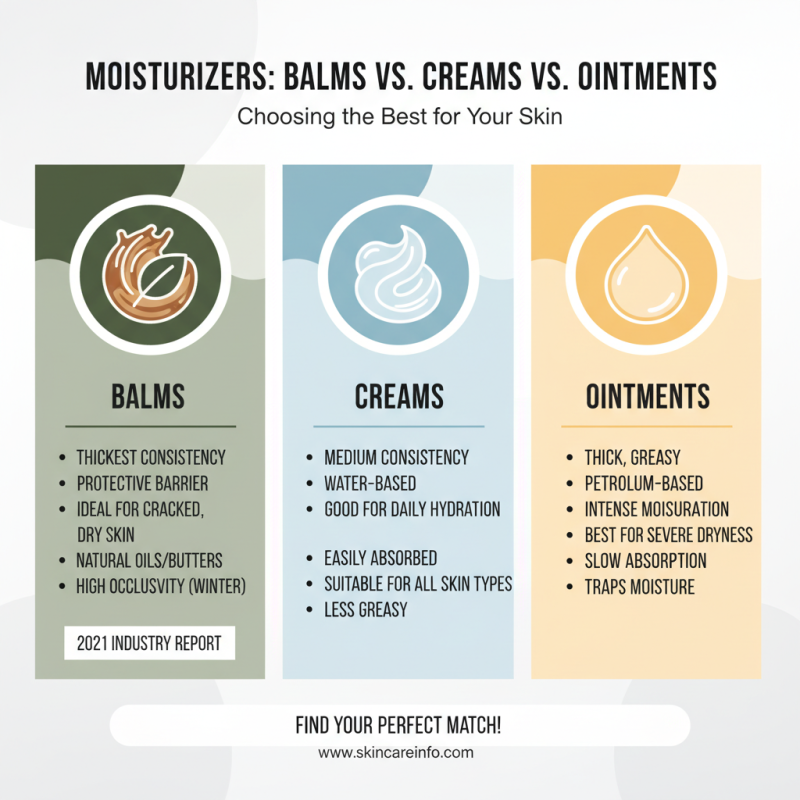
When selecting the best grease moisturizing products for your skin, understanding the differences between balms, creams, and ointments is crucial. Balms typically have a thicker consistency and provide a protective barrier, making them ideal for extremely dry or cracked skin. They often contain natural oils and butters, which can help to hydrate and soothe the skin. According to a 2021 industry report, balms often boast high occlusivity, which is essential for retaining moisture in parched skin, especially during winter months.
Creams, on the other hand, offer a balanced blend of water and oil, making them versatile for various skin types. They are typically lighter than balms, allowing for quick absorption while still delivering effective hydration. Recent studies indicate that creams containing ingredients like hyaluronic acid and glycerin can significantly improve skin hydration levels, making them suitable for everyday use.
Tips: Always check the ingredient list for beneficial components such as ceramides and aloe vera, which provide additional nourishment. For those prone to breakouts, opt for non-comedogenic products, particularly in cream formulations. Experimenting with a patch test can also help identify which product best suits your skin's specific needs.
Tips for Application: How and When to Moisturize Effectively
Moisturizing effectively is crucial for maintaining healthy skin, especially for those with conditions like dry skin or atopic dermatitis. Dermatologists emphasize that the right timeframe for application is key; ideally, moisturizers should be applied immediately after cleansing, when the skin is still slightly damp. This practice helps to lock in moisture and enhance the product's effectiveness. Furthermore, while choosing the right product, those with dry skin are often advised to opt for creams rather than lotions, as creams tend to have a higher oil content, providing a better barrier against moisture loss.
Incorporating ingredients like hyaluronic acid into your moisturizing routine can greatly benefit all skin types. According to dermatologists, hyaluronic acid can hold up to 1,000 times its weight in water, making it an exceptional hydrating agent. This ingredient works by attracting moisture to the skin, which is essential for achieving a plump, youthful appearance. For optimal results, layering a hyaluronic acid serum beneath a moisturizer can create a powerful moisture-locking effect, ensuring your skin remains hydrated throughout the day.
How to Choose the Best Grease Moisturizing Products for Your Skin - Tips for Application
| Product Type |
Ingredients |
Best For |
Application Time |
Frequency of Use |
| Cream |
Shea Butter, Coconut Oil |
Dry Skin |
After Shower |
Daily |
| Ointment |
Petrolatum, Lanolin |
Extremely Dry Skin |
Before Bed |
As Needed |
| Lotion |
Aloe Vera, Glycerin |
Normal to Combination Skin |
Morning & Night |
Daily |
| Body Butter |
Cocoa Butter, Jojoba Oil |
Very Dry Skin |
After Bath |
2-3 Times a Week |
| Facial Oil |
Argan Oil, Rosehip Oil |
Dry or Mature Skin |
Night Time |
Every Other Day |
Common Myths About Grease Moisturizers Debunked
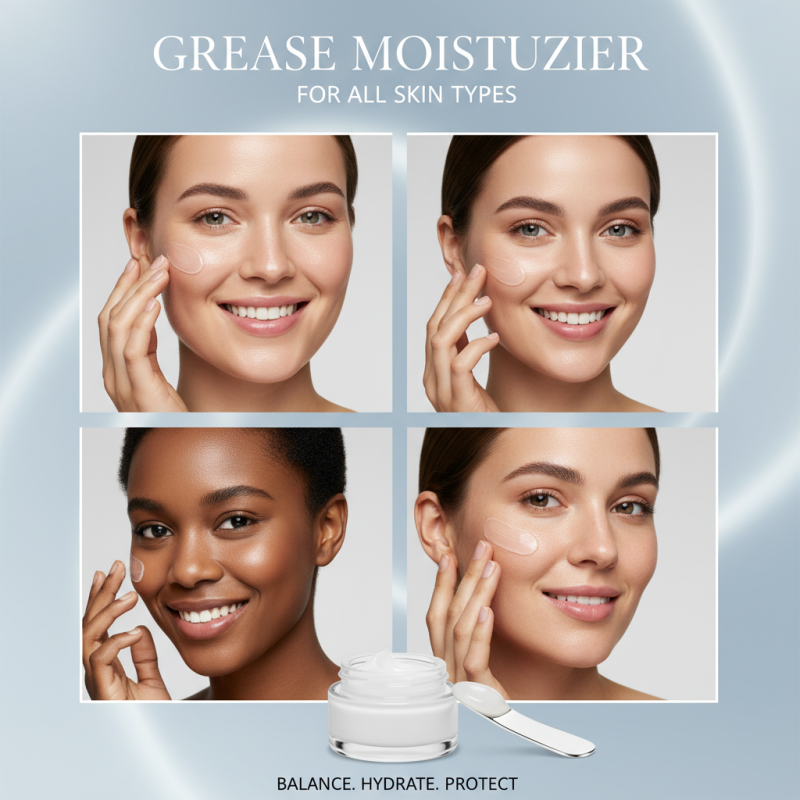
When it comes to grease moisturizers, there are numerous myths that can mislead consumers. One common misconception is that greasy products are only suitable for extremely dry skin. In reality, people with all skin types can benefit from these products. Grease moisturizers form a protective barrier that locks in moisture, making them effective for combating dryness caused by environmental factors, even for those with oily or combination skin. The key is to find the right formulation that balances moisture without overwhelming the skin.
Another myth is that using grease moisturizers will lead to clogged pores and acne. While it's true that some heavy formulations can cause breakouts for certain individuals, many high-quality grease moisturizers are non-comedogenic, meaning they won’t block pores. It's crucial for consumers to read labels and choose products that are specifically designed for their skin type. Understanding these myths can help individuals make more informed choices, ultimately leading to healthier, more hydrated skin.