Why Choose Nonionic Surfactants for Your Business Needs?
When choosing a surfactant for your business, Nonionic Surfactants emerge as a vital option. They are known for their versatility and effectiveness across various applications. Unlike ionic surfactants, Nonionic Surfactants work well in diverse conditions, including different pH levels. This adaptability can enhance product performance in industries such as cosmetics, cleaning, and agriculture.
Nonionic Surfactants stand out due to their lower toxicity and irritability compared to their ionic counterparts. This makes them ideal for sensitive applications. Their ability to stabilize emulsions and enhance wetting properties is also noteworthy. However, businesses must carefully consider the formulation guidelines. An improper mix can lead to less effective outcomes.
Embracing Nonionic Surfactants could significantly enhance product efficacy and sustainability. Challenges may arise, such as sourcing high-quality ingredients and ensuring compatibility with existing formulations. These areas require diligent research and expert knowledge to overcome effectively. By understanding these nuances, businesses can make informed decisions that promote reliability and innovation in their products.

Understanding Nonionic Surfactants: Definition and Characteristics
Nonionic surfactants are increasingly preferred in various industries due to their unique characteristics. Unlike ionic surfactants, nonionic types do not carry a charge. This property enhances their compatibility with a wide range of substances. They are less sensitive to water hardness and pH variations, which makes them reliable for various applications. According to recent industry reports, the nonionic surfactant market is projected to grow at a CAGR of 4.5% through 2028. This growth reflects their expanding roles in sectors like personal care, agriculture, and industrial cleaning.
One of the appealing traits of nonionic surfactants is their ability to perform well even in challenging conditions. They maintain stability in extreme temperatures and fluctuating pH levels. This resilience can lead to cost efficiencies and reduced formulation complexity. However, businesses must reflect on the specific compatibility of nonionic surfactants with their intended applications. Not every nonionic surfactant will fit every use case perfectly.
Tip: When choosing a nonionic surfactant for your product line, consider the specific performance metrics you need. Analyze your formulation for stability and end-use application. Experimentation might be necessary to find the most suitable option.
In conclusion, while nonionic surfactants offer versatile solutions, their effectiveness largely depends on appropriate selection and testing. Engage with suppliers who provide comprehensive technical data to understand the full range of options available.
Advantages of Using Nonionic Surfactants in Various Industries
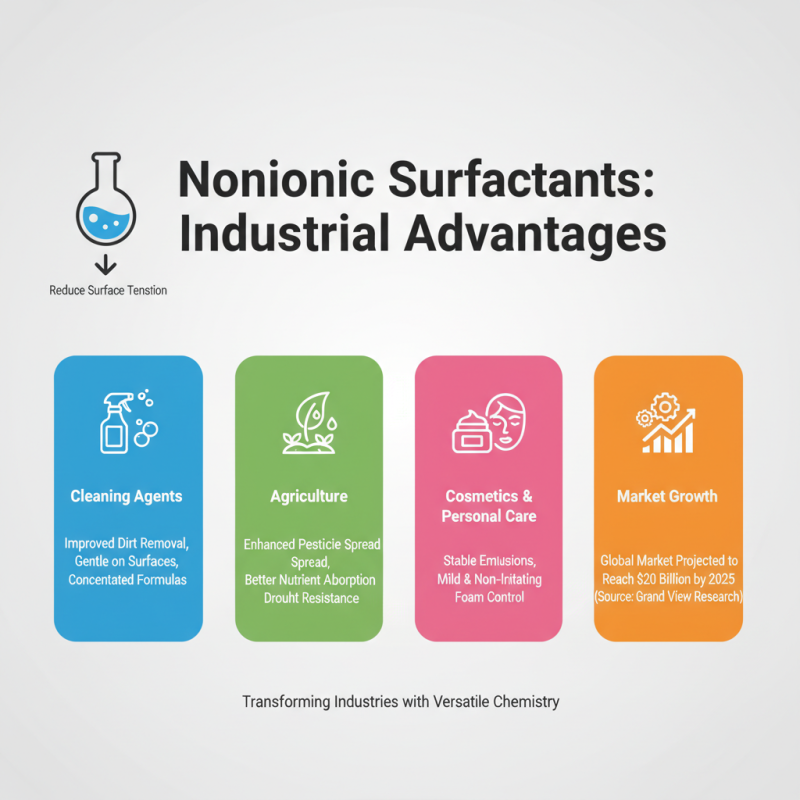
Nonionic surfactants are transforming various industries. Their ability to reduce surface tension is critical in applications like cleaning, agriculture, and cosmetics. According to a recent market analysis by Grand View Research, the global nonionic surfactants market is expected to reach $20 billion by 2025. This highlights their growing demand and essential role in multiple sectors.
One notable advantage is their compatibility with different formulations. Nonionic surfactants work well with both acidic and alkaline products. This flexibility makes them ideal for developing cleaning agents and detergents. They can enhance solubility and stability, leading to improved performance. For instance, in the agricultural sector, they help in better pesticide dispersion, increasing efficiency. However, while they provide these benefits, not all formulations yield optimal results. Some users report issues when combining nonionic surfactants with specific active ingredients.
Additionally, nonionic surfactants have a lower environmental impact compared to ionic types. They are biodegradable and pose minimal toxicity risks. The OECD Environmental Outlook reports that adopting greener surfactants can reduce aquatic pollution significantly. Yet, monitoring their long-term effects on ecosystems remains essential. Industries must continually evaluate their usage to mitigate any unforeseen consequences.
Applications of Nonionic Surfactants in Cleaning and Personal Care Products
Nonionic surfactants are widely used in cleaning and personal care products due to their unique properties. They are known for being gentle on skin, making them ideal for formulations like lotions and shampoos. A report by Global Market Insights indicates that the global nonionic surfactants market is expected to reach over $16 billion by 2026, highlighting their growing importance.
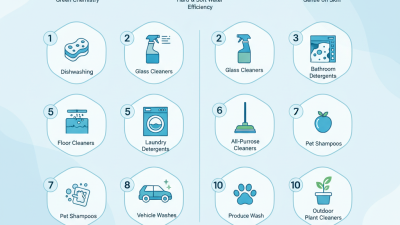
In cleaning products, nonionic surfactants help break down dirt and grime without causing irritation. They can effectively remove oil-based stains while being non-toxic. This balance makes them suitable for household cleaners and industrial detergents. Research shows that nonionic surfactants can enhance cleaning efficiency by up to 30% compared to traditional anionic surfactants.
Despite their benefits, it’s essential to be cautious. Some formulations may still lead to skin sensitivities in certain individuals. Additionally, sourcing sustainable ingredients for these surfactants poses challenges for manufacturers. Emphasizing transparency and safety in formulations is important. The push for eco-friendly and safe personal care solutions continues to shape industry trends. Companies must remain adaptable to meet evolving consumer expectations while balancing effectiveness and gentleness in their products.
Applications of Nonionic Surfactants in Cleaning and Personal Care Products
Environmental Impact and Safety Considerations of Nonionic Surfactants
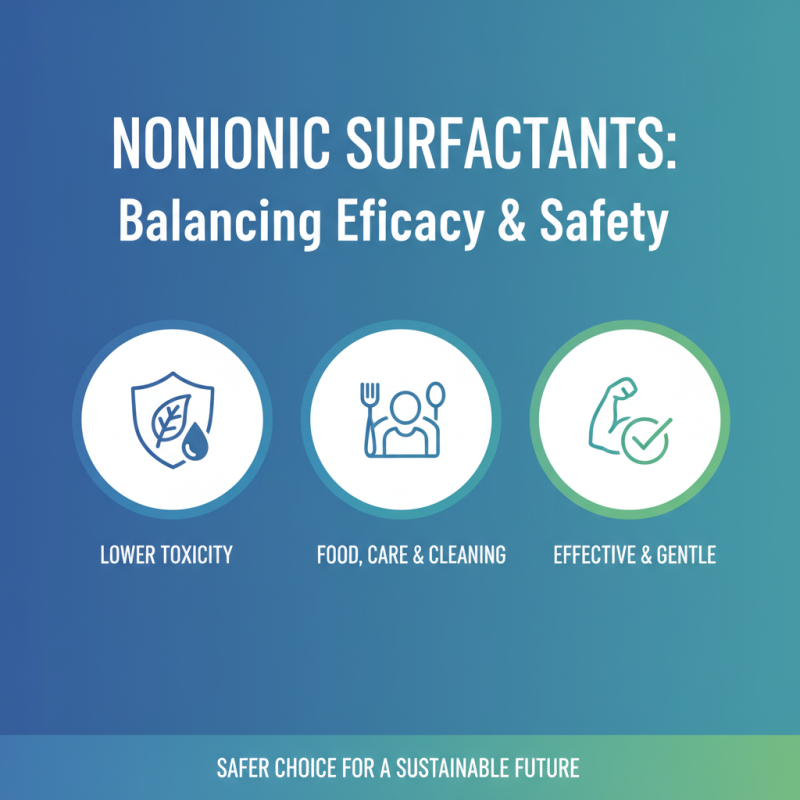
Nonionic surfactants are often considered a safer choice for many applications. They pose lower toxicity risks compared to their ionic counterparts. This characteristic makes them suitable for formulations in food, personal care, and cleaning products. Users increasingly demand safer alternatives that do not compromise efficacy. Nonionic surfactants fit this bill, providing a balance between performance and safety.
Environmentally, nonionic surfactants tend to exhibit better biodegradability. They break down more easily in natural settings, reducing pollution risks. This quality aligns with a growing emphasis on sustainability in business practices. However, not all nonionic surfactants are created equal. Some may still have an environmental footprint that requires attention.
Businesses need to remain vigilant and choose products that meet safety certifications. Transparency in sourcing and formulation is crucial. Awareness of the latest research can guide better choices. Striking a balance between performance and environmental responsibility is challenging. It often requires continuous evaluation and proactive adjustments. Embracing nonionic surfactants can be a step in the right direction, but ongoing diligence is essential for success.
Comparative Analysis: Nonionic vs. Ionic Surfactants in Business Applications
When choosing between nonionic and ionic surfactants, understanding their differences is crucial for business applications. Nonionic surfactants are known for their versatility. They work effectively in various pH levels. This makes them ideal for different industries, including textiles and agriculture. Their stability in varying conditions can lead to more efficient formulations.
On the other hand, ionic surfactants can be limited by their interaction with electrolytes. They may precipitate in high salt concentrations. This presents challenges in formulations that require high ionic strength. Furthermore, ionic surfactants can exhibit sensitivity to changes in temperature. This could lead to inconsistencies in product performance.
While both surfactant types have their benefits, businesses must assess their specific needs. Nonionic surfactants may offer broader application availability. However, they might come at a slightly higher cost. We should always evaluate the formulation's end-use carefully. Understanding these nuances can prevent costly mistakes and improve production efficiency.
Why Choose Nonionic Surfactants for Your Business Needs? - Comparative Analysis: Nonionic vs. Ionic Surfactants in Business Applications
| Criteria |
Nonionic Surfactants |
Ionic Surfactants |
| Surface Activity |
Good in a wide pH range |
Limited to specific pH levels |
| Foam Stability |
Higher foam stability |
Lower foam stability |
| Compatibility with Hard Water |
Highly compatible |
Less compatible, can precipitate |
| Environmental Impact |
Biodegradable options available |
Some variants are less biodegradable |
| Cost-Effectiveness |
Generally higher cost |
Generally lower cost |
| Application Versatility |
Suitable for various applications |
Limited to certain applications |