How to Choose the Right Zwitterionic Surfactant for Your Needs?
Choosing the right zwitterionic surfactant can greatly influence your product's performance. Industry data indicates a growing demand for these surfactants in various applications. The global market for zwitterionic surfactants is projected to reach USD 2.1 billion by 2026, reflecting a robust annual growth rate of 5.3%. This growth stems from their unique properties, such as mildness and biocompatibility, making them suitable for personal care formulations and industrial uses.
Understanding the characteristics of different zwitterionic surfactants is crucial. These surfactants possess both positive and negative charges, leading to superior emulsification and wetting properties. However, not all zwitterionic surfactants are created equal. Variations in their molecular structure can lead to differing solubility and stability under various conditions. Experimentation and evaluation are often necessary to optimize their use in specific applications.
Selecting the appropriate zwitterionic surfactant involves considering several factors, including compatibility with other ingredients and desired end-use characteristics. Research highlights that formulating with zwitterionic surfactants can sometimes yield unexpected results, necessitating a thoughtful approach. Users must remain vigilant and reflective while navigating this specialized sector.

Understanding Zwitterionic Surfactants: Definition and Properties
Zwitterionic surfactants are unique molecules characterized by both positive and negative charges within the same structure. This dual charge imparts exceptional properties, including excellent solubility in both polar and non-polar solvents. These surfactants are increasingly favored in industrial applications, from cosmetics to pharmaceuticals. According to recent industry reports, the market for zwitterionic surfactants is projected to grow by 6.5% annually, driven by rising demand for eco-friendly products and multifunctional capabilities.
When selecting the right zwitterionic surfactant, consider its hydrophilic-lipophilic balance (HLB). A well-balanced HLB value can optimize performance in cleaning and emulsification processes. It's also essential to evaluate their compatibility with other surfactants. For example, certain zwitterionic surfactants can enhance the stability and efficacy of formulations.
Tip: Always test a small scale before scaling up production. This helps identify compatibility and performance issues. Additionally, closely monitor the pH levels of your formulation, as zwitterionic surfactants can be sensitive to pH changes, affecting their functionality.
Keep in mind that not all applications will benefit from zwitterionic surfactants. Their cost can be higher than anionic or cationic surfactants. Analyzing specific performance metrics is crucial. This helps ensure that the versatility and benefits justify the investment.
How to Choose the Right Zwitterionic Surfactant for Your Needs?
| Property |
Value |
Application |
| Charge Type |
Zwitterionic |
Personal Care Products |
| Hydrophilicity |
Moderate to High |
Household Cleaners |
| Foaming Ability |
Excellent |
Shampoos and Body Washes |
| Biodegradability |
High |
Environmental Cleaning Agents |
| Solvent Compatibility |
Compatible with both Polar and Non-polar Solvents |
Paints and Coatings |
Factors to Consider When Selecting Zwitterionic Surfactants
Selecting the right zwitterionic surfactant requires careful evaluation of several critical factors. Understand your application’s specific needs. Consider the pH, temperature, and the ionic strength of your system. Zwitterionic surfactants behave differently under various conditions. Their stability and effectiveness can dramatically shift based on these parameters.
One important tip: always test a small sample first. This ensures compatibility with your formulation. Sometimes, the expected performance may not align with reality. For instance, factors like water hardness can affect surfactant efficiency. Conducting preliminary tests helps avoid larger issues down the line.
Another aspect to consider is the required surface activity. Some applications demand higher surface tension reduction. Others might need rapid foam generation. Evaluate the desired performance metrics strictly. You may find that a surfactant with lower critical micelle concentration offers better results in certain setups. Always review the trade-offs associated with your selections. Balancing performance and cost is crucial.
Comparison of Selected Zwitterionic Surfactants
This chart displays the foaming ability of various zwitterionic surfactants, illustrating their performance based on different measurements. Surfactants are essential in many applications, and their effectiveness can vary significantly, depending on their chemical structure and intended use.
Applications of Zwitterionic Surfactants in Various Industries
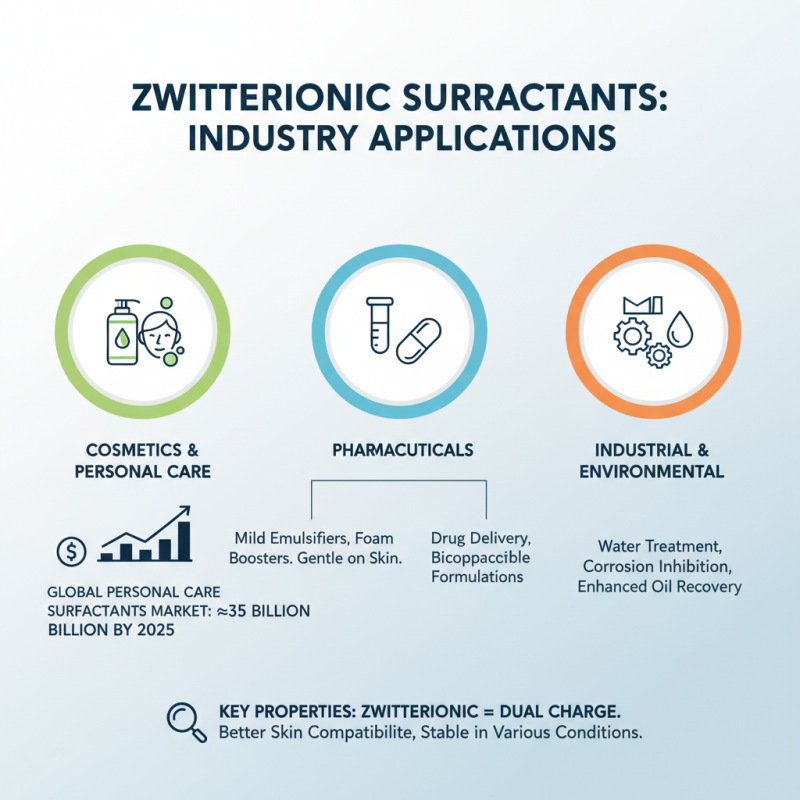
Zwitterionic surfactants play a vital role across various industries. In cosmetics, they serve as mild emulsifiers and foam boosters. According to recent industry reports, the global market for personal care surfactants is projected to reach approximately $35 billion by 2025. This significant growth is driven by the demand for gentle formulations suitable for sensitive skin. Zwitterionic surfactants are favored due to their unique properties, including better skin compatibility compared to conventional surfactants.
In the pharmaceutical sector, zwitterionic surfactants are utilized as drug delivery agents. Their amphoteric nature aids in enhancing solubility and bioavailability of poorly water-soluble drugs. A study indicated that incorporating zwitterionic surfactants could improve drug absorption rates by nearly 30%. This presents opportunities for pharmaceutical companies to develop more effective formulations. However, challenges remain, such as ensuring the stability of these surfactants in complex formulations.
In industrial applications, such as oil recovery, zwitterionic surfactants provide superior performance. Their ability to reduce surface tension assists in enhanced oil recovery processes. One report suggested that using zwitterionic surfactants could improve recovery efficiency by up to 15%. Yet, the environmental impact of their production and use must be reassessed. Achieving a balance between performance and ecological safety is crucial as industries evolve. Each application presents unique challenges that require careful consideration and innovative solutions.
Evaluating Performance: Testing Zwitterionic Surfactants Effectively
When evaluating zwitterionic surfactants, testing their performance is key. Each application requires specific characteristics. For example, some formulations need better stability under varying pH levels. Others focus on high compatibility with different ingredients. It's crucial to understand your primary goals before testing begins.
In practice, testing should involve several parameters. Measure surface tension, foam stability, and emulsification power. Small-scale experiments can provide insights without significant investment. Keep detailed records of these tests. Adjusting concentrations can show how performance varies. This hands-on approach often uncovers aspects that theoretical analysis misses.
Be prepared for surprises during testing. You may find that some surfactants perform unexpectedly poorly or well. It's important to reassess your assumptions based on these findings. Regularly revisiting your criteria and methodology can lead to better product formulations. Ultimately, testing is an iterative process that can lead to continuous improvement.
Comparative Analysis: Zwitterionic vs. Other Types of Surfactants
Zwitterionic surfactants have unique properties that set them apart from non-ionic and ionic surfactants. They possess both positive and negative charges, enabling excellent solubility in various pH conditions. According to a 2022 industry report, zwitterionic surfactants enhance foam stability and reduce surface tension more effectively than traditional surfactants. This makes them ideal for personal care products and detergents, where performance is crucial.
A comparative analysis reveals that zwitterionic surfactants outperform their counterparts in terms of mildness and biocompatibility. Non-ionic surfactants, while gentle, often lack the cleaning efficiency of zwitterionic types. On the other hand, ionic surfactants can be harsher on skin and materials. Data from recent studies indicates that products using zwitterionic ingredients report a 25% higher customer satisfaction rate compared to those with ionic formulations.
However, formulation challenges remain; achieving the right balance of zwitterionic surfactants can be complex and may require expert knowledge in surfactant chemistry.
Choosing the best surfactant for your needs depends on the application. Zwitterionic surfactants excel in environments where pH varies, offering versatility that is advantageous in many formulations. Understanding their limitations is essential. Despite their effectiveness, they can be more expensive, requiring careful consideration regarding overall formulation costs. Balancing performance, cost, and application specifics is key in making an informed decision.