
Leave Your Message

10 Tips for Buying Food Additives in Bulk

Buying Food Additives in bulk can reduce repeat orders and make production planning easier. But a lower price per kilogram does not always mean a better purchase. Additives differ in function, grade, strength, and handling needs. A powder that performs well in one recipe may not suit another. Start with the exact product specification and intended use. Ask suppliers for current technical documents, a certificate of analysis, lot identification, and clear storage guidance. Check that the paperwork matches the product and batch being offered. Small details matter.

Samples help. Test them in your own process before committing to a large shipment. Consider flavor, texture, solubility, and performance under your actual conditions. Then calculate the full cost, including freight, packaging, storage, and possible waste. Bulk stock can lose value if it absorbs moisture, passes its recommended shelf life, or sits unused. Keep an eye on minimum order quantities, package seals, and how consistently a supplier can provide the same specification. These checks are practical, though they cannot replace advice from a qualified food safety professional or review of applicable requirements.

This guide shares ten useful checks for comparing suppliers and planning purchases. It also asks a less comfortable question: do you truly need that much? Sometimes the sensible order is smaller. Review your forecast, storage capacity, and inventory rotation before deciding. A careful buying process takes time, and a document can still leave questions unanswered. Raise them before placing the order.
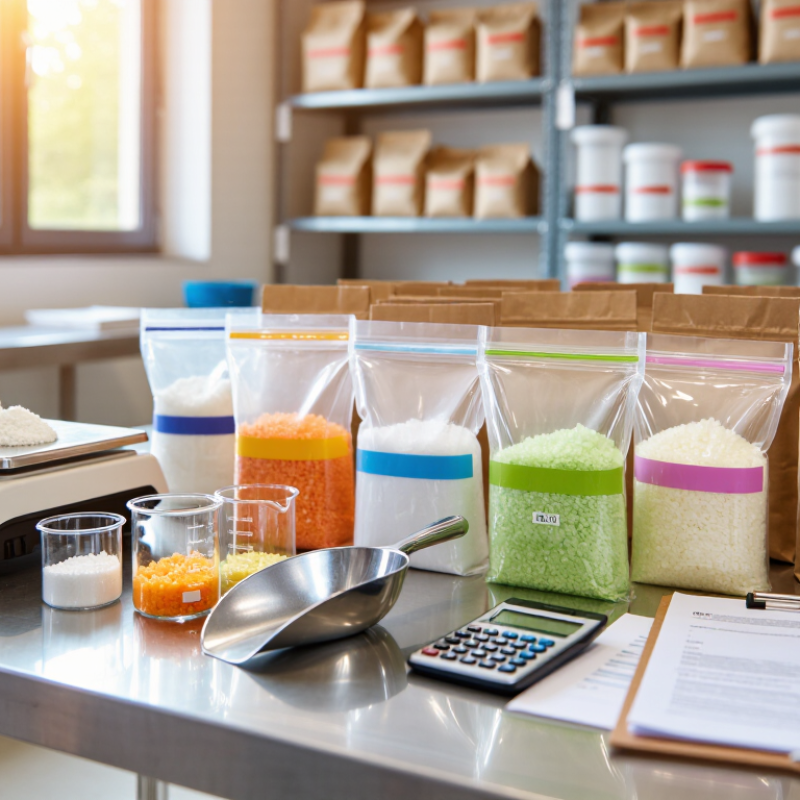
10 Tips for Buying Food Additives in Bulk

Assess Your Needs and Define Additive Specifications

Before requesting bulk quotes, translate production needs into a written specification. Name the food category, intended function, target dosage, processing temperature, and any limits on color, flavor, or texture. “A preservative” is too broad; specify the compound or permitted functional class your formulation requires. Details matter.

Check the intended use against authoritative references. The FAO/WHO Joint Expert Committee on Food Additives (JECFA) has evaluated more than 2,600 food additives, according to its evaluation records. The Codex General Standard for Food Additives organizes provisions by food category and use conditions. These references help frame questions, but they do not replace checking requirements for your product and destination market. Ask suppliers for a current specification sheet, certificate of analysis, allergen statement, and storage guidance. Confirm identity, assay or purity, moisture limits, packaging size, and lot traceability before comparing price per kilogram.

Make the specification practical for the plant floor. If powder tends to clump in a humid room, set a moisture limit and confirm suitable sealed packaging. If operators weigh small doses, ask about particle size and handling consistency. Test a representative sample in the actual recipe and process before committing to a pallet. Test it first. I still find that teams sometimes overlook how a minor flavor shift affects the finished product; leave room for sensory review, and record what needs another check.


Verify Supplier Credentials and Regulatory Compliance

Before placing a bulk order, confirm who is actually making the additive. A trading office may not control the production site. Ask for the manufacturer’s legal name, facility address, and current quality certificates. Check each certificate with its issuing organization, and confirm that its scope covers the product and site you plan to buy from. Paperwork can look convincing. It still needs checking.

Regulatory requirements vary by destination and intended use. Ask the supplier for documentation relevant to your market, such as a product specification, certificate of analysis, allergen statement, and safety data sheet where applicable. Compare the product name, grade, and manufacturing site across the documents. If details conflict, pause the order and request a written explanation. A certificate alone does not prove that every batch meets your needs.

For a bulk shipment, request a recent batch record or sample certificate of analysis and confirm how results are tested. Ask how lots are identified, retained, and traced if a quality issue arises. Also clarify storage conditions, shelf life, and change-notification procedures. Keep the answers with your purchasing records. One awkward detail can matter: a supplier may be qualified, yet a new facility or changed specification may require fresh review.

Check Product Quality, Samples, and Documentation

When buying food additives in bulk, judge the lot, not just the product name. Request a small sample from the same production batch you expect to receive. Check its color, odor, texture, and how it dissolves in your actual process. A fine powder can still clump after opening. Test a measured quantity in a pilot recipe, and record the result. Keep the sample sealed and labeled. Small details matter.

Ask for a current specification sheet, certificate of analysis, and safety data sheet where applicable. Match the documents to the batch number, manufacturing date, and stated grade. Review purity, moisture, particle size, storage limits, and shelf life against your needs. A certificate is useful, but it does not answer every question. If a limit or test method is unclear, ask for clarification before placing a large order. Documentation can look complete and still leave gaps. That part deserves a second look. Confirm storage instructions and available traceability records. Compare the delivered material with the approved sample before production, and retain a sealed reference portion. This takes time. A sample may not represent every later shipment, a possibility buyers sometimes overlook.

10 Tips for Buying Food Additives in Bulk — Check Product Quality, Samples, and Documentation
Tip What to Check Practical Verification Useful Records or Actions
1 Confirm the intended food use Check that the additive is permitted for the intended product and use level in the market where the food will be sold. Requirements can differ by jurisdiction and food category. Record the destination market, food category, applicable rule, and intended use before placing an order.
2 Define a written product specification Set measurable requirements such as identity, grade, appearance, assay or purity where applicable, moisture, and relevant contaminant limits. Use an agreed specification with clear test methods, units, tolerances, and revision date.
3 Request a representative sample Evaluate a sample before committing to a large quantity. Check appearance, odor, solubility, performance, and suitability in the actual food formulation where relevant. Label the sample with its lot or batch reference and keep evaluation results for comparison with the delivered material.
4 Review the Certificate of Analysis Check that the certificate identifies the product and lot, reports relevant test results, and uses methods and limits consistent with the agreed specification. Request lot-specific documentation and compare reported values with the approved specification.
5 Check identity and traceability Confirm that packaging and records identify the additive, lot or batch, manufacturing or packing details, and supplier traceability information. Keep purchase records, lot numbers, delivery documents, and a link between received lots and production batches.
6 Review safety and allergen information Request a current safety data sheet where applicable, plus relevant allergen, cross-contact, and handling information. A safety data sheet does not replace food-safety documentation. Assess the information against site procedures, ingredient controls, and applicable labeling requirements.
7 Inspect packaging and bulk suitability Check that the container is food-grade where required, intact, clean, sealed, and suitable for the product’s handling and storage conditions. Specify packaging type, tamper evidence where needed, labeling, and acceptable condition on delivery.
8 Confirm shelf life and storage conditions Review the stated shelf life, manufacture or re-test information where supplied, and any temperature, humidity, light, or moisture precautions. Agree on minimum remaining shelf life at receipt and use stock rotation based on lot and expiry information.
9 Assess supplier quality controls Ask about food-safety and quality systems, change control, complaint handling, and how nonconforming lots are investigated. Verify any claimed certification with current supporting evidence. Document supplier approval, audit or assessment findings, contacts, and notification expectations for product or process changes.
10 Plan incoming inspection and testing Set a risk-based receiving plan that checks identity, lot labels, packaging condition, and documentation; arrange additional testing when the risk or specification warrants it. Define acceptance, quarantine, sampling, release, and rejection steps before the bulk shipment arrives.

Compare Bulk Pricing, Order Terms, and Payment Options

A low price can still fool you. Compare the cost per kilogram, not just the supplier’s headline price. Add freight, pallet charges, and any fees for smaller deliveries. A 25-kilogram sack may look cheaper than several small packs, but only if you can use it before its stated shelf life. Check the product specification and lot details before comparing quotes; different grades may not be interchangeable. I still find spreadsheets easy to overcomplicate, so I keep each quote’s assumptions visible.

Read the order terms closely. Confirm the minimum order, delivery window, packaging format, and process for reporting damaged or incorrect goods. Ask whether quoted prices remain valid through the expected shipment date. Payment choices matter, too. Compare deposits, payment deadlines, transfer fees, and any available credit terms. A lower price tied to full advance payment may strain cash flow, especially when stock moves slowly. Request written terms, and make sure the invoice matches the agreed quantity and product description. Small discrepancies are easy to miss. Before placing a large order, a modest trial shipment can reveal whether the packaging, delivery timing, and paperwork work for your operation.

Plan Packaging, Delivery, Storage, and Inventory Control

Bulk purchasing shifts risk from unit price to handling. Match pack sizes to actual weekly use, not just supplier minimums. A 25-kilogram sack may reduce freight costs, but opened stock needs resealing and a clean, dry scoop. Confirm liner materials, pallet dimensions, lot codes, and storage limits before dispatch. Book delivery when trained staff and clear dock space are available. Check seals and labels on arrival, and record damaged packaging. Small step, big payoff. The FDA Food Code 2022 advises keeping food at least six inches above the floor, a useful baseline for clean, inspectable storage.

Keep each additive in its original, labeled packaging when practical, and follow its supplier’s temperature and humidity guidance. A hygrometer and a simple daily log can reveal damp corners before caking becomes a costly problem. The FAO’s 2019 State of Food and Agriculture estimated that 13.8% of food was lost globally between harvest and retail; this is not an additive-specific figure, but it highlights the value of careful handling. Track lot numbers, receipts, and open dates in an inventory system. Apply first-expiring, first-out rotation, and set reorder points using lead time and average use. Plans look neat on paper. Busy receiving days can still disrupt them.