7 Tips for Choosing the Right Cationic Surfactant?
Choosing the right Cationic Surfactant is rarely a simple matter of selecting the strongest positive charge. Performance depends on chemistry, concentration, pH, temperature, and the surface being treated. A formula that performs beautifully on cotton may leave a dull film on glass. Small details matter. Very much.
Dr. Martin J. Schick, a respected surfactant scientist, described the practical foundation this way: “A surfactant is a substance which, when present at low concentration in a system, has the property of adsorbing onto surfaces and interfaces.” This principle guides every reliable Cationic Surfactant decision. The molecule must reach the interface, orient correctly, and remain compatible with the surrounding ingredients. Otherwise, the expected softness, antistatic effect, antimicrobial performance, or conditioning benefit may disappear.
This guide examines seven useful selection points, including molecular structure, charge density, solubility, pH tolerance, substrate compatibility, formulation stability, and responsible testing. Real evaluation should begin with a small laboratory batch. Observe clarity, viscosity, odor, and separation after heating and cooling. Test treated fabric, hair, or hard surfaces under realistic conditions. I have seen formulas fail because the surfactant was chosen from a technical sheet alone. That shortcut is tempting. It is also incomplete.
A dependable choice requires documented specifications, supplier transparency, safety data, and regulatory review for the intended market. No single Cationic Surfactant fits every application. The better question is more specific: what must this ingredient do, where must it work, and what could go wrong?

Understanding Cationic Surfactant Structure and Function
7 Tips for Choosing the Right Cationic Surfactant?
Understanding Cationic Surfactant Structure and Function
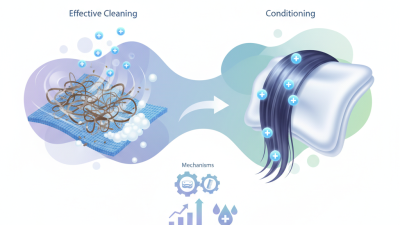
Charge matters. Cationic surfactants carry a positively charged head and a water-repelling hydrocarbon tail. This structure helps them attach to negatively charged fibers, hair, and mineral surfaces. Begin by checking the head group, such as quaternary ammonium or amine-based chemistry. Quaternary compounds usually remain charged across a wider pH range. Amine-based materials can respond more strongly to formulation pH. The difference affects deposition, conditioning, and compatibility. Next, compare tail length and branching. Longer tails may improve surface affinity, but can reduce solubility. Small changes matter.
Check the critical micelle concentration, or CMC, before setting dosage. Below the CMC, molecules mainly occupy interfaces; above it, micelles form. Test real water hardness, temperature, and pH. Laboratory water can be too clean. Also examine the counterion, biodegradability profile, and compatibility with anionic ingredients. Anionic and cationic materials may form insoluble complexes.
MarketsandMarkets forecasts the global surfactants market to grow from about USD 47.1 billion in 2024 to USD 59.1 billion by 2029, at roughly 4.7% annually. Grand View Research reports continued growth through 2030, driven partly by personal-care and industrial applications. These figures show demand, not automatic performance.
I still treat one successful batch as an early clue, not proof. Measure viscosity, clarity, irritation indicators, and residue after storage. Test it.
Cite: MarketsandMarkets, Surfactants Market—Global Forecast to 2029; Grand View Research, Surfactants Market Size Report.
Matching Surfactant Properties to the Intended Application
7 Tips for Choosing the Right Cationic Surfactant
Matching Surfactant Properties to the Intended Application
Tip 1: Define the application before selecting chemistry. Fabric softeners, hair conditioners, disinfectant formulations, and industrial coatings need different charge densities. Tip 2: Match molecular structure to the target surface. Long hydrophobic chains improve deposition, but may reduce water dispersibility. Tip 3: Check compatibility with anionic ingredients. Opposite charges can create haze, precipitation, or unexpected viscosity changes. Small errors matter.
Tip 4: Evaluate performance under realistic conditions. Test hard water, temperature changes, dilution, and storage time. A clear laboratory sample may separate after several weeks. Tip 5: Measure deposition, not only foam or appearance. For textile applications, softness, static control, and rinse behavior provide stronger evidence. Tip 6: Review toxicological and environmental data before scale-up. The OECD emphasizes exposure assessment, biodegradation, and aquatic effects when evaluating surfactant safety. Regional regulatory databases should support every technical decision.
Tip 7: Verify supplier data through independent testing. Confirm active content, pH, impurities, viscosity, and batch consistency. Grand View Research valued the global surfactants market at approximately USD 46.1 billion in 2022, showing the sector’s scale and formulation diversity. Market size does not guarantee suitability. One weakness remains common: formulators sometimes select by price or name alone. A controlled pilot trial reveals more. Record the exact dosage, mixing order, and temperature. Then challenge the formula again.
7 Tips for Choosing the Right Cationic Surfactant
Matching Surfactant Properties to the Intended Application
The chart compares representative critical micelle concentration values for widely studied cationic surfactants at approximately 25°C in water. A lower CMC generally indicates that micelles form at a lower concentration, which can support efficient surface modification, antimicrobial formulation, emulsification, or conditioning when other performance requirements are satisfied.
When selecting a cationic surfactant, evaluate charge and adsorption behavior, CMC, compatibility with anionic ingredients, pH and electrolyte tolerance, biodegradability, toxicity, temperature stability, and regulatory requirements. Actual values vary with temperature, counter-ion, purity, and formulation composition.
Comparing Safety, Biodegradability, and Environmental Impact
7 Tips for Choosing the Right Cationic Surfactant
Compare safety data before performance claims. Tip one: read the Safety Data Sheet, especially aquatic toxicity, skin irritation, and exposure limits. Tip two: check the test method, not only the phrase “biodegradable.” OECD Test Guideline 301B requires at least 60% carbon dioxide evolution within 28 days for ready biodegradability. That number matters. Tip three: request results for the exact chemical and concentration. Similar names can hide different risks.
Tip four: examine biodegradation in realistic conditions. Cationic surfactants may bind strongly to sludge, sediment, or organic particles. Removal from wastewater does not always mean destruction. The European Chemicals Agency highlights the need to assess persistence, bioaccumulation, and aquatic toxicity together. Tip five: review chronic aquatic data, not just short-term fish tests. A product that looks acceptable after 48 hours may behave differently during continuous discharge. I would avoid relying on one laboratory result.
Tip six: measure environmental impact across the full use cycle. Consider transport, dilution, wastewater treatment, packaging, and disposal. The OECD recommends structured testing because ready biodegradability results can be affected by concentration and test conditions. Tip seven: compare dosage efficiency. Lower use levels can reduce total release, even when biodegradability is similar. This point is often overlooked. Ask for independent laboratory reports, updated registration data, and clear uncertainty statements. Honest gaps are more useful than polished claims.
Selecting Suppliers and Verifying Product Quality
7 Tips for Choosing the Right Cationic Surfactant?
Selecting a supplier requires more than comparing prices.
Grand View Research valued the global surfactants market at about USD 47.2 billion in 2023. That scale attracts capable producers, but also inconsistent documentation. Ask for a current technical data sheet, safety data sheet, and lot-specific certificate of analysis. Confirm active matter, amine value, pH, color, moisture, and impurities. Do not accept “standard quality” as a specification. It is too vague.
Request a representative sample from the exact production lot.
Test it independently before approval. Check viscosity after dilution, odor, dispersion, and performance on the intended fiber or surface. A clean-looking sample can still mislead. ISO 9001 certification supports process control, but it does not prove chemical performance. Review the supplier’s testing methods, calibration records, change-control procedure, and batch traceability. Small details matter. Ask how they handle out-of-specification results.
Environmental documentation also deserves careful review.
OECD test guidance can help assess aquatic toxicity and biodegradation data, while regional regulatory dossiers may provide additional substance information. Verify that the supplier’s data matches the exact chemical identity, concentration, and formulation. Avoid relying on generic product brochures. They are often incomplete. I have seen purchasing teams overlook packaging compatibility and storage temperature, then blame the surfactant later. Check both. Compare at least two lots and define acceptance limits before placing a larger order. A supplier should explain variability honestly, even when the answer is inconvenient.