Top 10 Emulsifying Solubilizers You Should Know About?
Emulsifying solubilizers play a crucial role in various industries. They help blend oils and water, creating stable mixtures. These substances are essential in food, cosmetics, and pharmaceuticals. The right emulsifying solubilizer can improve product texture and effectiveness.
However, not all emulsifying solubilizers are created equal. Some might cause issues like separation or instability. Choosing the wrong one can lead to wasted resources and unsatisfactory products. It’s important to understand individual emulsifying properties.
As you explore the top 10 emulsifying solubilizers, consider their specific uses and benefits. By recognizing their strengths and limitations, you can make informed choices. The right selection enhances performance and user satisfaction. Embrace the potential of these agents, but be cautious about their application.
Overview of Emulsifying Solubilizers and Their Importance in Formulations
Emulsifying solubilizers play a crucial role in various formulations. They help blend oil and water, two substances that typically do not mix. By creating stable emulsions, they enhance product texture and appearance. This is particularly vital in cosmetics and food products, where visual appeal matters.
The effectiveness of emulsifying solubilizers can vary greatly. Some formulations may fail to achieve the desired stability. Factors like ingredient compatibility and concentration levels should be carefully considered. For instance, the balance between hydrophilic and lipophilic groups can significantly influence emulsification efficiency.
In many cases, experimenting with different solubilizers is necessary. It is not a one-size-fits-all solution. Observing how each emulsifier behaves in a formulation is key. Small adjustments can lead to vastly different results. Knowing when a formula works or when it needs revision takes time and experience.
Key Properties of Effective Emulsifying Solubilizers
Emulsifying solubilizers play a crucial role in product formulation, especially in cosmetics and food industries. They help mix oil and water, creating stable emulsions. An effective emulsifying solubilizer must have unique properties. The ability to reduce surface tension is essential. This aids in blending two immiscible liquids, ensuring uniform distribution.
Another key property is compatibility. A good solubilizer melds well with various ingredients. It should enhance product stability. A solubilizer’s hydrophilic-lipophilic balance (HLB) is vital. It indicates where the emulsifier will best function. High HLB values favor water, while low values work better with oils.
Viscosity affects the texture of the final product. Some solubilizers can thicken the mixture, affecting application ease. One might struggle to find the right balance. Adjusting ratios can lead to unexpected results. Sometimes, too much solubilizer can destabilize the blend instead of enhancing it. Understanding these properties is essential for effective formulation.
Top 10 Emulsifying Solubilizers: Features and Applications
Emulsifying solubilizers play a crucial role in product formulation across various industries, including
cosmetics, pharmaceuticals, and food. These agents help stabilize mixtures of oil and water, ensuring a consistent product quality.
According to recent industry reports, the demand for emulsifying agents is projected to grow by approximately 4.5% annually through 2027, driven by innovations in sustainable formulations.
Common emulsifying solubilizers include cetyl alcohol and polysorbates.
They enhance texture and feel, which is vital in skincare. For instance, cetyl alcohol provides a creamy consistency,
improving user experience. Reports highlight their application in lotions and creams, where a stable emulsion is essential for effective delivery of active ingredients.
Tips: It's essential to test different emulsifiers in your formulations. Not all emulsifiers work well with every ingredient.
Sometimes, a combination may provide better stability. Monitor sensory attributes like smoothness and absorption.
Reflect on ingredient interactions to improve your formulation success.
Comparative Analysis of Popular Emulsifying Solubilizers
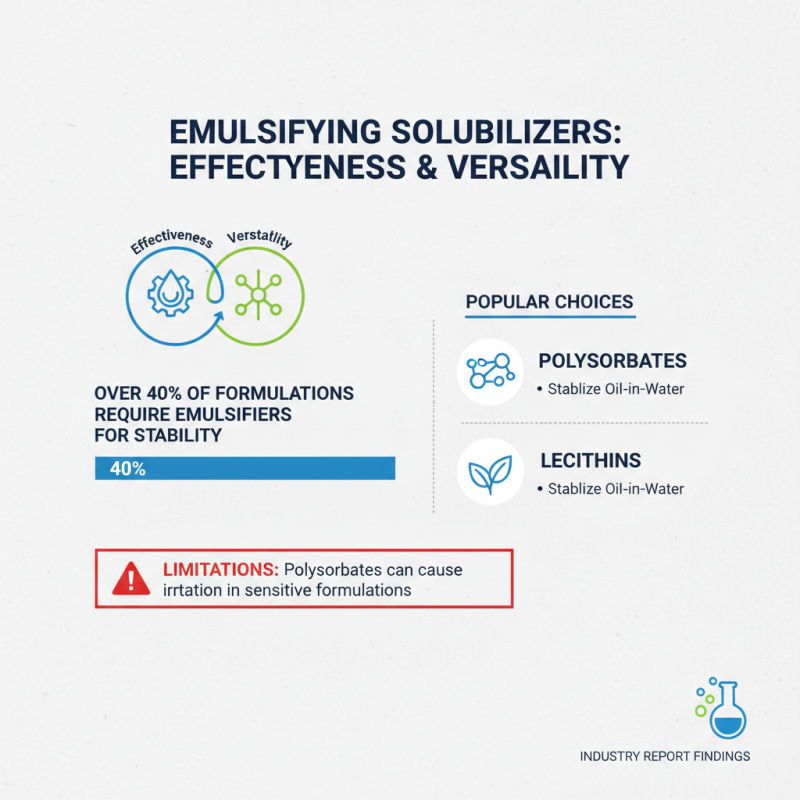
When comparing emulsifying solubilizers, it’s crucial to focus on their effectiveness and versatility. An industry report indicates that more than 40% of formulations rely on effective emulsifiers to achieve desired stability. Popular choices include polysorbates and lecithins, recognized for their ability to stabilize oil-in-water emulsions. However, each type has its limitations; for instance, polysorbates can cause irritation in sensitive formulations.
A detailed market analysis shows that surfactants account for approximately 25% of the total emulsifier market. This highlights the growing demand for innovative solubilizers in personal care products. Natural emulsifiers, like plant-derived glycerol esters, are gaining traction due to their eco-friendly profile. Yet, they may not always deliver the desired texture or shelf-life stability compared to synthetic options. The trade-off between natural and synthetic solubilizers is an ongoing discussion within the industry, emphasizing the need for more data-driven decisions.
Consumer preferences are shifting towards greener solutions, but many brands still struggle with formulation challenges. The gap between consumer expectations and ingredient performance remains a significant hurdle. There's still room for improvement in balancing efficacy and environmental impact within emulsifying agents. Brands must continuously explore options while remaining aware of potential trade-offs.
Safety Considerations and Regulatory Aspects of Emulsifying Agents
When discussing emulsifying agents, safety and regulations are paramount. These substances play a crucial role in various industries, from food to cosmetics. It's essential to ensure they meet safety standards to protect consumers.
Regulatory bodies evaluate emulsifiers for potential toxicity. They also assess their long-term effects on health. Many substances are deemed safe for use. However, not all emulsifiers are created equal. Some can trigger allergic reactions in sensitive individuals. Always scrutinize ingredient lists, especially if you have known allergies.
Tip: Always patch-test new products containing emulsifiers. This simple step can prevent unexpected skin reactions. Keep an eye on new studies regarding emulsifiers. Research on food-grade and cosmetic-grade ingredients evolves constantly.
Furthermore, the environmental impact of emulsifiers cannot be ignored. Some may contribute to pollution during production or disposal. Sustainable sourcing is gaining importance. Companies should prioritize eco-friendly alternatives. It reflects a commitment to both safety and the environment.
Tip: Research brands that prioritize sustainability. Support those that provide transparency in their ingredient sourcing. Your choices can promote better practices in the industry.
Top 10 Emulsifying Solubilizers You Should Know About
| Emulsifying Agent |
Common Uses |
Safety Considerations |
Regulatory Status |
| Lecithin |
Food, Cosmetics |
Generally recognized as safe (GRAS) |
FDA approved |
| Sodium Lauryl Sulfate (SLS) |
Personal Care, Cleaning Products |
Irritant at high concentrations |
Regulated by EPA |
| Polysorbate 80 |
Food, Pharmaceuticals |
Low toxicity, well-tolerated |
FDA approved |
| Glycerol Monostearate (GMS) |
Food, Cosmetics |
Considered safe for use |
FDA approved |
| Cetyl Alcohol |
Cosmetics, Personal Care |
Generally safe, minimal irritation |
FDA listing available |
| Stearic Acid |
Food, Cosmetics |
Generally recognized as safe |
FDA approved |
| Xanthan Gum |
Food, Pharmaceuticals |
Safe for general use |
FDA recognized |
| Sorbitan Monostearate |
Food, Cosmetics |
Generally safe, low irritant |
FDA approved |
| Carrageenan |
Food, Dairy Products |
Mild digestive issues in some |
Generally recognized as safe |
| Guar Gum |
Food, Pharmaceuticals |
Safe for consumption |
FDA recognized |