Top 10 Zwitterionic Surfactants You Should Know About?
In the dynamic field of surfactants, zwitterionic surfactants play a crucial role. As Dr. Emily Hartwell, a leading expert in surfactant chemistry, states, "Zwitterionic surfactants balance performance and compatibility, making them invaluable in various applications." These unique molecules possess both positive and negative charges, which allow for enhanced solubility and effectiveness in diverse environments.
Their applications span from personal care products to pharmaceuticals. Zwitterionic surfactants have the ability to stabilize emulsions and enhance foaming properties, qualities that are highly sought after in many industries. However, it is important to note that not all zwitterionic surfactants are created equal. The specific structural variations can lead to different behaviors and effectiveness.
While researchers continue to explore their benefits, challenges remain. For instance, some zwitterionic surfactants may interact adversely with certain ingredients in formulations. This complexity makes it essential for manufacturers to carefully select the right surfactant for their needs. With the innovation in surfactant science, understanding the nuances of zwitterionic surfactants is becoming increasingly important for industry leaders.
What Are Zwitterionic Surfactants and Their Unique Properties?
Zwitterionic surfactants are unique molecules with both positive and negative charges. This dual nature gives them special properties. They can interact with various substances, such as oils and water. This interaction makes them versatile in many applications.
These surfactants often have excellent foaming and wetting capabilities. This characteristic can enhance the effectiveness of cleaning products. Moreover, they are generally less irritating to skin compared to other surfactants. This makes them appealing for personal care items. However, their production can be complex and costly. Creating stable formulations remains a challenge for manufacturers.
The environmental impact of zwitterionic surfactants should also be considered. While they offer many benefits, it’s essential to ensure they are biodegradable. Their performance in different pH conditions can vary. Understanding these nuances is crucial for optimizing their use in various industries.
Applications of Zwitterionic Surfactants in Various Industries
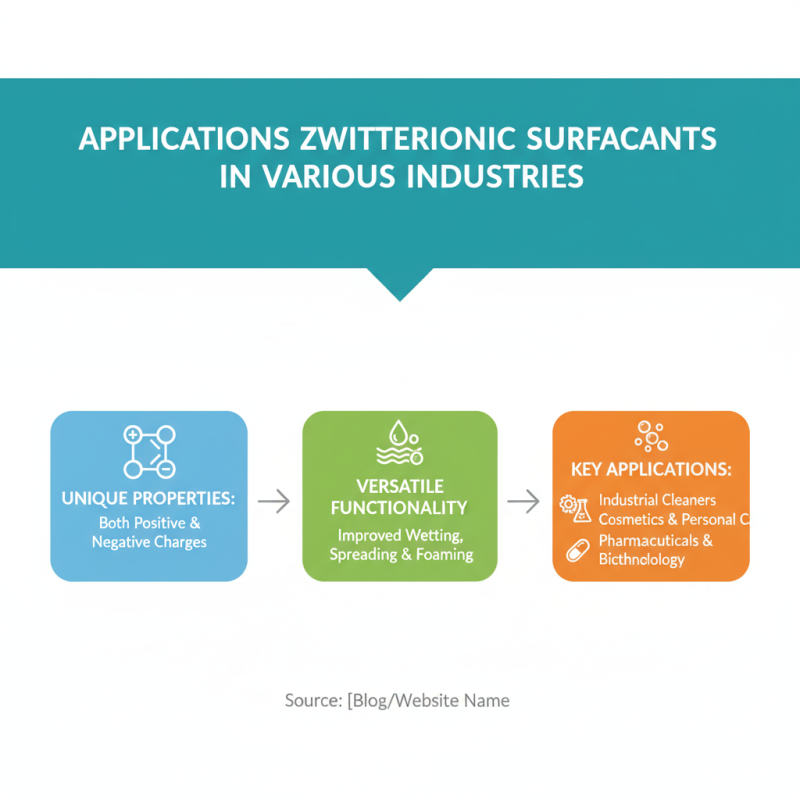
Zwitterionic surfactants are vital in various industries due to their unique properties. They possess both positive and negative charges, giving them versatile functionality. These surfactants improve wetting, spreading, and foaming abilities, making them suitable for many applications.
In the personal care industry, zwitterionic surfactants serve as gentle cleansers. They are often found in shampoos and body washes, providing effective cleansing without stripping natural oils. Their mildness appeals to sensitive skin users, enhancing skin health. In the pharmaceutical field, these surfactants play a role in drug delivery. They improve solubility and stability, enabling better absorption of medications.
Zwitterionic surfactants also find applications in biomedicine. They are used for membrane formulations and have potential in gene delivery systems. Despite their advantages, challenges remain. Their stability can vary under different conditions. This variability creates a need for more research. Industry professionals must address these issues for optimal utilization.
Top 10 Zwitterionic Surfactants: Overview and Key Features
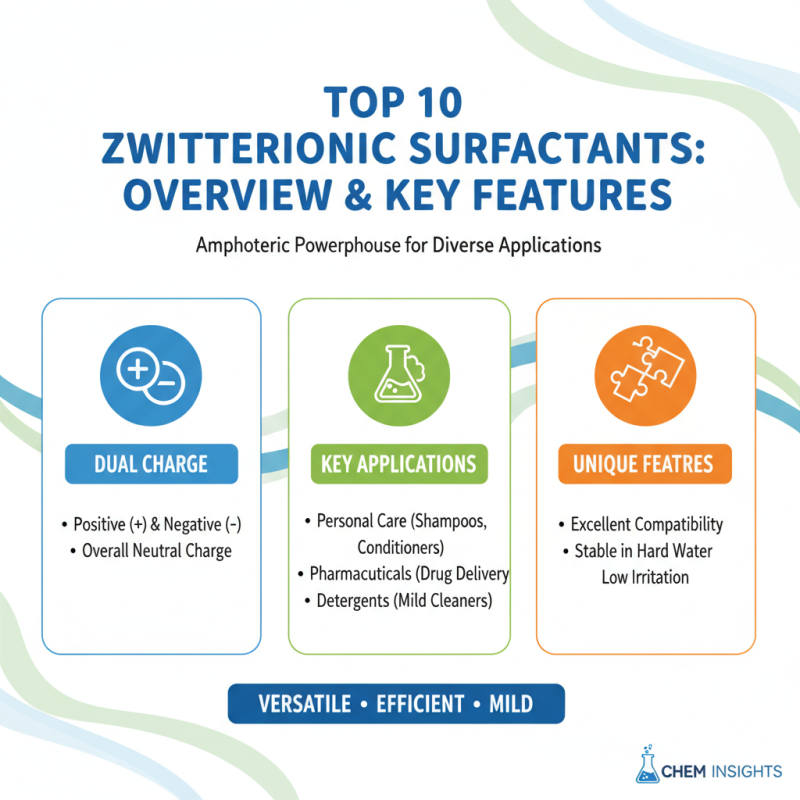
Zwitterionic surfactants play a crucial role in various industries. These surfactants possess both positive and negative charges. This unique property allows them to perform exceptionally well in diverse applications. Their amphoteric nature makes them ideal for use in personal care, pharmaceuticals, and detergent formulations.
Current data indicates that the global zwitterionic surfactants market is expected to grow significantly. According to a report from a leading industry analyst, it is projected to reach over $1 billion by 2027, reflecting a compound annual growth rate (CAGR) of around 5.6%. This growth highlights their increasing adoption across multiple sectors.
Tips: When selecting zwitterionic surfactants, consider compatibility with other ingredients. They can enhance product performance but require careful formulation. Conduct small-scale tests to evaluate their impact on product stability and efficacy.
The functionality of zwitterionic surfactants stems from their ability to reduce surface tension effectively. They exhibit excellent foaming and wetting properties. However, challenges can arise in formulation stability. Improper balancing of surfactant types may lead to phase separation. Observing outcomes can improve formulation strategies. Understanding their behavior in different pH levels is vital.
Environmental Impact and Biocompatibility of Zwitterionic Surfactants
Zwitterionic surfactants are gaining attention for their unique properties. Their ability to act as both cationic and anionic agents makes them versatile. This dual nature also influences their environmental impact, inviting extensive study. Many researchers focus on their biodegradability and potential to pollute.
Zwitterionic surfactants are often praised for their biocompatibility. They have a lower toxicity compared to traditional surfactants. This characteristic is crucial in applications like pharmaceuticals and cosmetics. However, there's a gap in understanding their long-term effects on ecosystems. While initial findings are promising, further research is necessary.
Concerns about accumulation in water bodies persist. Zwitterionic surfactants could interact with various microorganisms. This interaction may lead to unexpected ecological consequences. Consequently, a well-rounded analysis of their environmental effects is needed. Balancing their benefits with potential risks will be essential for future applications.
Future Trends in Zwitterionic Surfactant Research and Development
The landscape of zwitterionic surfactants is rapidly evolving. Research indicates a growing demand for sustainable and biodegradable alternatives. By 2025, the global market for surfactants is projected to exceed $45 billion, with zwitterionic variants gaining traction due to their environmental benefits. These surfactants are known for their unique ability to stabilize foams and emulsions, making them valuable in personal care and industrial applications.
Recent studies show that zwitterionic surfactants have distinct advantages over traditional surfactants. They exhibit lower toxicity and better biocompatibility. Data from the American Chemical Society highlights that these surfactants reduce environmental impact significantly. However, challenges still exist. Synthesizing zwitterionic surfactants can be more complex and costly, leading to hesitation among manufacturers.
Future research aims to address these issues through innovative synthesis techniques. Advances in biotechnology could lead to cost-effective methods for producing zwitterionic surfactants. Additionally, there is a push for applying these surfactants in pharmaceuticals and food industries, where safety is paramount. As this field progresses, understanding the long-term effects on ecosystems will be crucial. Exploring the balance between production efficiency and environmental impact remains an essential task for researchers.
Top 10 Zwitterionic Surfactants - Trends in Research and Development
This chart displays the research interest index for the top 10 zwitterionic surfactants. The index ranges from 0 to 100, indicating varying levels of interest within the scientific community. As this field evolves, these surfactants are gaining attention for their unique properties and potential applications.