How to Use Liquid Thickener for Perfecting Your Recipes?
Cooking can be a delightful experience, but sometimes, our recipes need a little help. That's where Liquid Thickener comes into play. It's a versatile ingredient that can elevate your dishes, adding the desired texture and consistency. Whether you're making soups, sauces, or gravies, this thickener can transform your cooking.
Using Liquid Thickener is not without its challenges. Getting the right amount can be tricky. Too much and your dish may become gummy; too little, and it might remain runny. It's essential to experiment and adjust based on your specific recipe. Each dish is unique, and finding the perfect balance may require a few attempts.
Visualize the rich, velvety sauce you want. Picture it coating your pasta or drizzling over a roast. With Liquid Thickener, achieving that texture is possible, but it may take practice to get it just right. Don't be discouraged by initial failures; instead, treat them as learning opportunities. Each attempt helps refine your technique and brings you closer to perfection.

Introduction to Liquid Thickeners in Cooking
Liquid thickeners are essential in modern cooking. They help achieve the desired consistency without altering flavors significantly. According to recent industry reports, the global thickening agent market is projected to grow by 5.6% annually. This highlights the growing importance of thickeners in culinary applications. Many chefs and home cooks alike appreciate their versatility across dishes, from gravies to soups.
When using liquid thickeners, it’s crucial to keep a few tips in mind. For starters, always mix the thickener with a small amount of water before adding it to your dish. This prevents clumping. Additionally, consider the cooking time required. Some thickeners work well in quick-cooking situations, while others may need longer to reach their full thickening potential.
Experimenting can lead to unexpected results. Not all thickeners perform the same across various recipes. You might find that a specific thickener works perfectly in a sauce but produces a less desirable outcome in a pudding. Reflecting on these experiences ensures better future choices. Cooking is as much about trial and learning as it is about technique. Don't shy away from making errors; they often lead to the best culinary insights.
Types of Liquid Thickeners and Their Uses
Liquid thickeners come in various types, each serving unique purposes.
Cornstarch is a popular choice for soups and sauces. It provides a glossy finish and a smooth texture.
Use a slurry method by mixing cornstarch with cold water before adding it to hot liquids. This prevents clumping.
Another common thickener is arrowroot, which is excellent for fruit sauces.
It creates a clear gel, enhancing the visual appeal. Arrowroot thickens at lower temperatures. Be careful not to boil it too long; otherwise,
it will break down.
Tips for using liquid thickeners include timing and quantity. Add thickeners gradually to avoid over-thickening.
Observe your dish as you incorporate it.
Adjust slowly. Not every dish requires a thickener. Sometimes, less is more. Experiment and find what works best.
Keep it simple, and don’t rush the process. Reflection can lead to better results.
Step-by-Step Guide to Using Liquid Thickeners
Using liquid thickeners can transform your recipes, giving them the richness and texture you desire. Start by selecting the right thickener for your dish. Common options include cornstarch, arrowroot, or even ground chia seeds. Each has its unique properties and works differently when heated.
To use liquid thickeners effectively, mix them with a small amount of cold water or broth first. This will prevent clumping. Once mixed, slowly incorporate the thickener into your hot liquid, stirring constantly. Watch as your sauce or soup begins to thicken. Sometimes, it might not achieve the desired texture. Don’t worry. Adjusting the amount can help.
Be mindful of cooking times. Some thickeners need longer to activate, while others can create a gummy texture if overcooked. It’s a delicate balance. Taste as you go and note how the flavor changes. Experimenting lets you discover what works best for your palate. Keep a journal of your trials. Reflect on what went well and what didn’t.
How to Use Liquid Thickener for Perfecting Your Recipes?
Tips for Achieving the Perfect Consistency in Recipes
Achieving the perfect consistency in your recipes can be a challenge. Liquid thickeners are great tools to help. They create a smooth texture in dishes like soups, sauces, and even desserts. Getting it right takes practice, so don’t be discouraged if it doesn’t work perfectly the first time.
Tip one: Start with a small amount of thickener. If you use too much, the texture can become gummy. Gradually add it while stirring. This will help you observe how the mixture changes. If it’s too runny after your first attempt, you can always add a little more.
Tip two: Allow the dish to cook for a few minutes after adding the thickener. This gives the thickener time to activate and show its full effect. Be careful! Waiting too long can lead to an overly thick dish.
Tip three: Don’t hesitate to adjust your flavors. Sometimes, the added thickness can alter taste. A pinch of salt or a splash of acidity can balance it out. If you find your sauce too thick, a bit of broth or water can help, but be mindful to keep the flavor intact.
How to Use Liquid Thickener for Perfecting Your Recipes? - Tips for Achieving the Perfect Consistency in Recipes
| Recipe Type |
Liquid Thickener Type |
Recommended Usage Amount (per cup) |
Tips for Best Results |
| Sauces |
Cornstarch |
1-2 tablespoons |
Mix with cold water before adding. |
| Soups |
Tapioca Starch |
1 tablespoon |
Add gradually and stir continuously. |
| Desserts |
Xanthan Gum |
1/2 teaspoon |
Blend well with other dry ingredients. |
| Dressings |
Guar Gum |
1/4 teaspoon |
Mix with vinegar before adding oil. |
| Baking |
Psyllium Husk |
1 tablespoon |
Mix with dry ingredients for better texture. |
Common Mistakes to Avoid When Using Liquid Thickeners
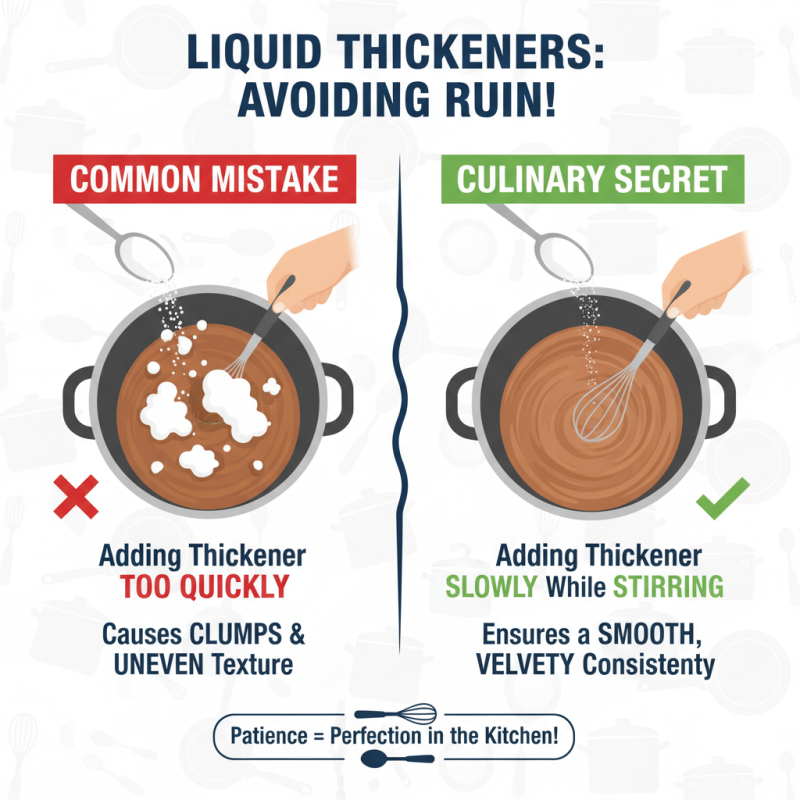
Using liquid thickeners can elevate your cooking, but common mistakes can ruin your dish. One frequent error is adding thickener too quickly. This leads to clumps forming instead of a smooth texture. According to industry reports, achieving the right consistency often requires patience. Adding thickeners slowly while stirring helps avoid this issue.
Another mistake involves not accounting for heat. Many cooks add thickeners without reaching the required temperature for activation. For example, starch-based thickeners require boiling to fully thicken. A failure to do this can result in a runny sauce or soup. The right heat level is crucial for optimal results; aim for a steady boil to ensure your thickener performs effectively.
Lastly, measuring inaccurately is a common pitfall. Too much thickener can lead to an overly gelatinous texture. A study showed that maintaining the correct ratio can improve dish quality by up to 30%. Use precise measurements and adjust gradually. Balancing flavors and thickness can be challenging, but it is essential for perfecting your recipes. Embrace these reflections and experiment with caution.