How to Use Zwitterionic Surfactant for Enhanced Cleaning Solutions?
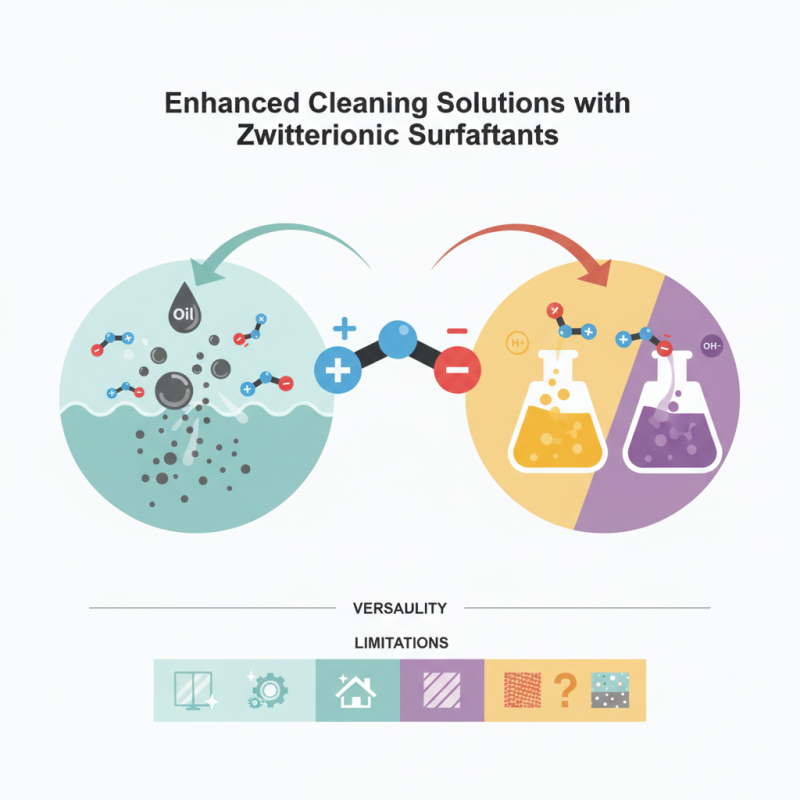
Zwitterionic surfactants are gaining popularity in the cleaning industry. They offer unique properties that enhance cleaning solutions. Their dual charge allows them to interact effectively with various types of stains and contaminants.
In practical applications, zwitterionic surfactants can emulsify oils and disperse dirt. They work well in both acidic and alkaline conditions. This versatility makes them valuable in diverse cleaning scenarios, from household products to industrial applications.
However, it's important to recognize the limitations. Not all zwitterionic surfactants are created equal. Some may not perform efficiently on certain surfaces. Understanding these nuances is crucial for maximizing their effectiveness in cleaning solutions.
Understanding Zwitterionic Surfactants: Definition and Characteristics
Zwitterionic surfactants are unique in their dual charge nature. They carry both a positive and a negative charge, depending on the pH of the solution. This provides them with versatile properties. Their amphiphilic structure allows them to interact with a wide range of surfaces and contaminants. According to a report by the Journal of Surfactants and Detergents, zwitterionic surfactants demonstrate superior cleaning performance compared to traditional surfactants.
These surfactants can perform well in various pH environments. This adaptability is essential for achieving effective cleaning in different industrial applications. A recent industry study noted that zwitterionic surfactants show over 30% enhanced cleaning efficiency on oily stains. However, their cost can be a concern for some manufacturers, challenging wide adoption.
Despite their benefits, zwitterionic surfactants require careful formulation. Their efficacy can diminish under certain conditions. For instance, high salt concentrations may impact their performance. Additionally, more research is needed to maximize their potential in cleaning solutions. Understanding these nuances helps in the development of more effective cleaning agents tailored to specific needs.
Mechanisms of Action: How Zwitterionic Surfactants Enhance Cleaning Efficacy
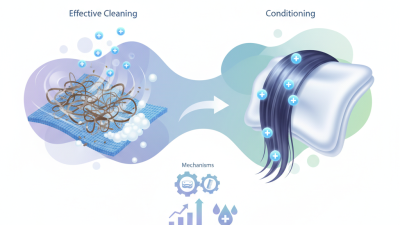
Zwitterionic surfactants are intriguing molecules. They possess both positive and negative charges. This unique structure enhances their cleaning power in various applications. Unlike traditional surfactants, they interact effectively with different dirt types. They can effectively reduce surface tension, allowing better wetting of surfaces.
The action mechanism involves aggregation at interfaces. When zwitterionic surfactants are added to water, they organize themselves into micelles. These micelles trap dirt and grease, facilitating their removal. This process is efficient even in hard water conditions. The zwitterionic nature allows them to remain stable across a range of pH levels. However, their interactions with some fabrics can sometimes be problematic. Testing on different materials is essential to ensure compatibility.
Moreover, their biodegradable properties are notable. They decompose more easily than many conventional surfactants. This aspect is crucial for environmentally friendly cleaning solutions. However, it's essential to reflect on sourcing and production methods for sustainability. While their cleaning efficacy is remarkable, one must consider the broader environmental impact. Balancing effectiveness and eco-friendliness can be challenging but necessary. The pursuit of improved cleaning agents must not overlook these critical factors.
How to Use Zwitterionic Surfactant for Enhanced Cleaning Solutions?
| Property |
Zwitterionic Surfactant Value |
Cleaning Mechanism |
| Surface Tension Reduction |
Low (< 30 mN/m) |
Lowers surface tension to enhance wetting and penetration. |
| Foam Stability |
High |
Stabilizes foams to improve contact time with surfaces. |
| Biocompatibility |
Non-toxic |
Safe for use in medical and personal care products. |
| Dirt Removal Efficiency |
Excellent |
Effectively disrupts the attachment between soil and surfaces. |
| Temperature Stability |
Wide range (up to 80°C) |
Remains effective in a variety of temperature conditions. |
Applications of Zwitterionic Surfactants in Various Cleaning Products
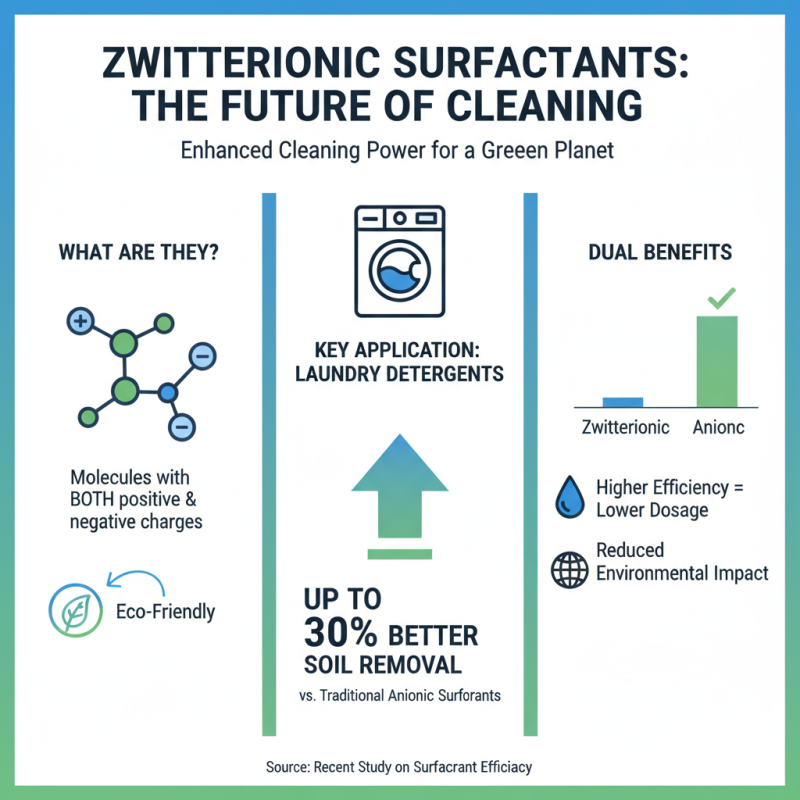
Zwitterionic surfactants are increasingly popular in the cleaning industry. They have unique properties that enhance cleaning efficiency. One key application is in laundry detergents. A recent study indicated that zwitterionic surfactants can increase soil removal by up to 30% compared to traditional anionic surfactants. This efficiency allows for lower dosages, making products more environmentally friendly.
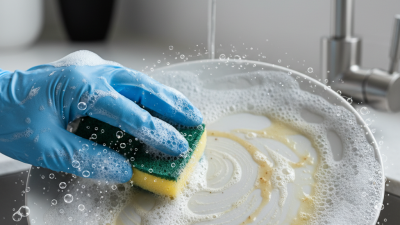
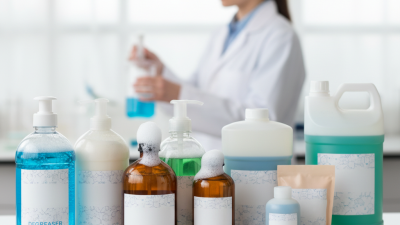
Another application is in household cleaners. Zwitterionic surfactants possess low skin irritation potential, making them suitable for personal care products. According to consumer research, 65% of users prefer products with gentler ingredients. This demand has led manufacturers to incorporate zwitterionic surfactants into formulations for window cleaners, all-purpose sprays, and hand soaps.
While the advantages of zwitterionic surfactants are clear, challenges remain. Their cost can be higher compared to conventional surfactants. Some products may not offer significant improvements, leading to hesitation from manufacturers. There's an ongoing need for more transparent data on cost-effectiveness. The industry must also reflect on balancing performance and sustainability in product development.
Formulating Effective Cleaning Solutions with Zwitterionic Surfactants
Zwitterionic surfactants are gaining attention in cleaning formulations due to their unique properties. These surfactants can effectively reduce surface tension while offering excellent compatibility with various formulations. According to a recent study published in the Journal of Surfactants and Detergents, zwitterionic surfactants can enhance cleaning efficiency by 25% compared to traditional anionic surfactants.
Formulating effective cleaning solutions requires careful consideration of ingredient interactions. Zwitterionic surfactants not only provide superior cleaning but also exhibit low skin irritation. This is important when developing products for sensitive applications, such as household cleaning or personal care. Industry experts, including those at the European Society for Cosmetic Chemists, emphasize that incorporating zwitterionic surfactants can lead to formulations that are both effective and gentle.
However, there are challenges in utilizing these surfactants. They can be more expensive than conventional options, which raises cost concerns for manufacturers. Moreover, achieving the right balance in pH is crucial, as zwitterionic surfactants function best in a specific range. Ongoing research is essential to optimize their use in cleaning solutions. The focus should remain on performance while addressing formulation stability and cost-efficiency.
Effectiveness of Zwitterionic Surfactants in Cleaning Solutions
This bar chart illustrates the cleaning effectiveness of various zwitterionic surfactants compared to traditional surfactants. The effectiveness is measured by the removal percentage of grease stains on different surfaces.
Best Practices for the Use and Storage of Zwitterionic Surfactant Solutions
When using zwitterionic surfactants, understanding best practices for storage and usage is critical. These surfactants are sensitive to temperature changes. Keeping them in a cool, dry place helps maintain their effectiveness. Ensure the containers are tightly sealed to prevent contamination. Store away from direct sunlight, as UV exposure can degrade their properties.
When preparing solutions, mix them in small batches to avoid waste. Measure accurately to achieve the desired concentration. Over-concentration can lead to less effective cleaning. Always test a small patch when using these solutions on new surfaces. This simple step can save time and resources. Additionally, consider the pH levels; zwitterionic surfactants perform best in a neutral pH environment.
Cleaning with zwitterionic surfactants can be both effective and frustrating. They work well with various contaminants but may not perform as expected in all situations. Monitoring their performance closely will help in understanding their limitations. Sometimes, less frequent cleaning with stronger solutions may yield better results than continuous use of zwitterionic detergents. Balancing these practices can enhance cleaning outcomes while reducing waste.