Why Choose Cationic Surfactants for Your Business Needs?
In today's competitive market, businesses are constantly seeking effective solutions to enhance their products. Cationic surfactants offer significant advantages across various industries, from personal care to agriculture. Dr. Emily T. Reynolds, a leading expert in surfactant chemistry, asserts, "Cationic surfactants provide unmatched benefits in formulation stability and efficacy."
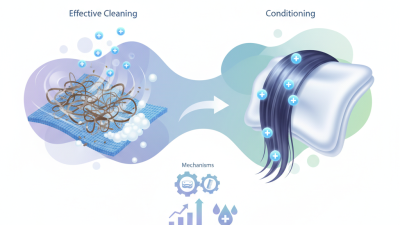
Cationic surfactants are known for their strong positive charge, which allows them to interact effectively with negatively charged surfaces. This unique property enhances product performance, particularly in hair conditioning and antimicrobial applications. Businesses benefit from these surfactants by improving product quality and customer satisfaction.
While the advantages are clear, choosing the right cationic surfactant involves careful consideration. Not all formulations yield the same results, and some may require adjustments. Understanding the specific needs of your product line is crucial for success. The potential for innovation in this area is vast, making it essential for businesses to stay informed and adaptable.

Understanding Cationic Surfactants and Their Properties
Cationic surfactants play a crucial role in various industries due to their unique properties. They are positively charged molecules that can reduce surface tension, making them excellent emulsifiers and stabilizers.
A study by the Specialty Surfactants Association indicates that the market for cationic surfactants is projected to grow at a CAGR of 5% from 2023 to 2030. This growth is driven by their effectiveness in personal care and industrial applications.
The antimicrobial properties of cationic surfactants make them valuable in formulations. These surfactants can help preserve products and enhance their shelf life. Their ability to bind with negatively charged surfaces, such as hair and skin, allows for improved conditioning in shampoos and conditioners. However, improper usage can lead to skin irritation in sensitive individuals, which is a noteworthy consideration for formulators.
Tips: Consider the concentration of cationic surfactants in your formulations. Too much can weigh hair down, while too little may not deliver the desired results. Always conduct patch tests to ensure skin compatibility before full-scale production. Balancing efficacy and safety is essential in utilizing these effective surfactants.
Key Advantages of Cationic Surfactants for Commercial Use
Cationic surfactants offer distinct advantages for commercial applications. Their positive charge allows them to bond effectively with negatively charged surfaces, making them ideal for a range of uses. Industries that require effective disinfectants often benefit from these surfactants due to their impressive antimicrobial properties. They can easily eliminate bacteria and viruses, enhancing the safety of various products.
Moreover, cationic surfactants excel in conditioning applications, particularly in personal care products. They provide a smooth and silky feel, often used in hair conditioners. Users notice improved manageability and shine. This aspect of cationic surfactants is particularly compelling in competitive markets where customer satisfaction is crucial.
However, it's essential to consider the environmental impact. Some formulations may raise concerns about biodegradability. Companies must explore eco-friendly alternatives or modify existing compounds to meet sustainability goals. Balancing effective performance with environmental responsibility presents challenges that necessitate ongoing reflection and innovation in formulation practices.
Applications of Cationic Surfactants in Various Industries
Cationic surfactants are crucial in various industries due to their unique properties. They are commonly found in personal care products, textiles, and even agrochemicals. Their ability to reduce surface tension makes them effective in formulations where spreading and wetting are vital. For example, in hair conditioners, cationic surfactants deposit on hair strands, enhancing softness and manageability.
In the textile industry, these surfactants are used for dyeing processes. They help in better dye uptake on fabric surfaces. This improves color vibrancy and consistency. Additionally, they can provide anti-static properties, which is particularly beneficial for synthetic fibers. The agricultural sector also employs cationic surfactants as adjuvants to enhance pesticide effectiveness.
Tip: Always test cationic surfactants in small batches before full-scale production. This ensures compatibility with other ingredients and avoids potential formulation issues.
Another application is in sanitation. Cationic surfactants exhibit antimicrobial properties, making them suitable for disinfectants and cleaners. They can effectively eliminate bacteria on surfaces. However, relying solely on them for sanitation might not be enough. It's important to combine them with other agents for a comprehensive cleaning approach.
Tip: Regularly review safety data sheets (SDS) for cationic surfactants. Understanding their properties is essential for safe handling and effective usage.
Why Choose Cationic Surfactants for Your Business Needs?
| Industry |
Application |
Benefits |
Cationic Surfactant Examples |
| Personal Care |
Hair conditioners and skin moisturizers |
Enhanced conditioning, smoothness, and moisture retention |
Behentrimonium methosulfate, Cetrimonium chloride |
| Household Cleaning |
Fabric softeners and surface cleaners |
Static reduction and antimicrobial properties |
Dodecylbenzenesulfonic acid, Quaternary ammonium compounds |
| Agriculture |
Pesticide formulations and adjuvants |
Increased efficacy and better spreading on crops |
Alkyl dimethyl benzyl ammonium chloride |
| Textiles |
Softening agents and dyeing assistants |
Improved feel and enhanced color brightness |
Cationic agents for dyeing fabrics |
| Food Industry |
Emulsifiers and stabilizers |
Enhanced texture and shelf stability |
Lecithin, Cationic starches |
Comparing Cationic Surfactants with Other Types of Surfactants
Cationic surfactants offer distinct advantages over anionic and nonionic surfactants in various applications. Their positive charge allows them to bond effectively with negatively charged surfaces, such as hair and skin. This property makes them particularly useful in personal care products, where conditioning and moisturizing effects are desired. Many users notice improved softness and manageability with cationic surfactants.
In industrial uses, cationic surfactants are valuable for their antibacterial properties. In formulations for sanitizers or disinfectants, they enhance efficacy against certain pathogens. However, they may not always be the best choice for every situation. For instance, in some applications, anionic surfactants provide better cleaning ability due to their superior foaming qualities.
Choosing the right surfactant often requires careful consideration. Factors like environmental impact, compatibility with other ingredients, and cost-effectiveness should be evaluated. Experimentation may reveal surprising outcomes. Businesses should be ready to adapt formulations based on new findings and practical performance. This approach may lead to more effective and sustainable products.
Selecting the Right Cationic Surfactant for Your Business Needs
When selecting cationic surfactants for your business, consider the purpose and application. These surfactants are known for their excellent conditioning properties. They effectively reduce static and enhance moisture retention, making them popular in personal care products. However, the choice is not always straightforward. What works well in one formulation may not suit another.
Evaluate the specific requirements of your products. Factors like pH levels and compatibility with other ingredients matter significantly. Some cationic surfactants perform better in acidic environments, while others require neutrality. It’s crucial to test stability and effectiveness in your specific formulation. Regular assessments of the performance can help fine-tune your choice.
Additionally, consider the environmental impact of your surfactants. Many businesses are shifting towards sustainable options. The market offers various biodegradable alternatives that meet regulatory standards. Balancing performance with environmental responsibility is ongoing. It requires research and possibly adjustments to your processes. Adopting this perspective can lead to novel solutions and innovations in your formulations.