Top Food Additives You Need to Know for Global Sourcing?
In today's global food market, understanding food additives is crucial for sourcing decisions. These substances enhance flavor, preserve shelf life, and improve texture. However, not all food additives are created equal. Awareness of their benefits and potential risks is essential.
Many food additives, like emulsifiers and preservatives, play vital roles in product quality. Yet, some may evoke health concerns. This duality demands careful consideration when sourcing products from different regions. Suppliers should provide transparent information about their ingredients. Informed choices are necessary in a landscape filled with varying regulations and standards.
Navigating the world of food additives requires expertise. Companies should invest in understanding these ingredients deeply. This knowledge ultimately fosters trust in the products they offer. Building awareness around food additives can empower consumers, encouraging more thoughtful purchasing decisions.

Essential Food Additives in Global Sourcing: An Overview
When engaging in global sourcing, understanding food additives is essential. These substances enhance flavor, preserve freshness, and improve texture. Familiarizing yourself with common additives can empower informed sourcing decisions. Accuracy in ingredient sourcing builds trust and clear communication with suppliers.
**Tip:** Explore natural alternatives where possible. Many consumers are more health-conscious today. They prefer products with fewer synthetic additives. Offering cleaner labels can help brands appeal to this growing market.
Some additives can cause reactions in sensitive individuals. Therefore, transparency is key. Highlighting the use of certain additives can differentiate your product. Yet, not all additives are scrutinized equally. This inconsistency raises questions about safety and regulatory practices.
**Tip:** Regularly review your ingredient list. This ensures compliance and aligns with consumer trends. Engaging in a proactive assessment of your sourcing strategy helps mitigate risks. Understanding the science behind these additives enhances your credibility in the industry.
Top Food Additives You Need to Know for Global Sourcing
| Additive Name |
Function |
Common Uses |
Regulation Status |
| Sodium Benzoate |
Preservative |
Beverages, pickles, sauces |
Approved |
| Citric Acid |
Acidulant, Preservative |
Beverages, candies, jams |
Approved |
| Sodium Nitrite |
Preservative, Color Fixative |
Cured meats, sausages |
Regulated |
| Xanthan Gum |
Thickener, Stabilizer |
Salad dressings, sauces |
Approved |
| Gelatin |
Gelling Agent |
Desserts, marshmallows |
Approved |
Understanding Food Additive Regulations Across Different Countries
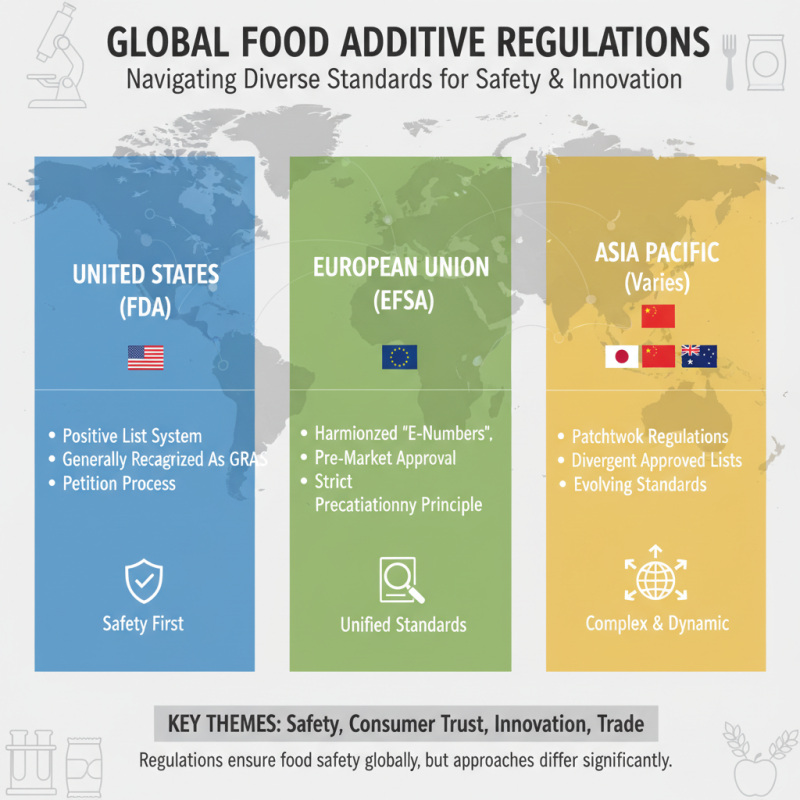
Food additives play a crucial role in food production and safety worldwide. Regulations vary dramatically across countries. In the European Union, strict guidelines govern the use of these additives. The European Food Safety Authority (EFSA) assesses safety before approval. In contrast, the United States follows a different approach. The U.S. Food and Drug Administration (FDA) allows many additives under a Generally Recognized as Safe (GRAS) standard, creating potential inconsistencies.
Across Asia, regulations also differ significantly. In China, food safety laws are evolving rapidly. The country is tightening its regulations to align more closely with international standards, but gaps still exist. A report from the Food Safety Research Institute highlighted that almost 40% of additives used in Chinese products have not undergone rigorous testing. This disparity raises concerns for global brands sourcing ingredients.
Understanding these regulatory landscapes is vital for businesses. Compliance ensures safety and builds consumer trust. However, navigating these complexities is not straightforward. Companies must continually educate themselves on changing regulations. The need for reliable information is more pressing than ever, with reports indicating that nearly 30% of manufacturers face challenges in meeting local regulations. It's essential to stay informed and adapt strategies accordingly.
Key Types of Food Additives and Their Functions in Food Products
Food additives play a significant role in the global food industry. Understanding their functions is crucial for sourcing safe and quality products. These additives serve various purposes, such as preserving freshness, enhancing appearance, and improving flavor.
One of the key types of food additives is preservatives. They help extend shelf life by preventing bacterial growth. Examples include citric acid and sodium benzoate. They may not always be necessary, though, as some consumers prefer fresh products without them.
Another category is flavor enhancers like monosodium glutamate (MSG). They intensify natural flavors in food. However, there are debates about their effects on health. It's essential to weigh these concerns when sourcing food products.
**Tips:** Always check ingredient labels for transparency. Look for additives that are well-researched and widely recognized. Consider consumer preferences for natural or organic options. Being informed can guide better choices in food sourcing.
Evaluating the Safety and Quality of Food Additives for Sourcing
When sourcing food additives globally, assessing their safety and quality is essential. According to the Food and Agriculture Organization (FAO), over 300 food additives are widely used across various cuisines. However, not all additives are created equal. Some may provide functional benefits like preservation, while others could pose health risks. For instance, certain artificial colorings have been linked to hyperactivity in children, as highlighted in studies by the European Food Safety Authority (EFSA).
Understanding the origin and processing of these additives is crucial. Many additives are derived from natural sources, such as plant extracts, while others are synthetically produced. The Global Food Safety Initiative (GFSI) emphasizes the need for rigorous testing and certification for these products. Recent data shows that about 60% of consumers prefer food with fewer additives. This trend compels manufacturers to reevaluate their sourcing strategies, ensuring compliance with safety standards. Still, inconsistencies in labeling and transparency may raise concerns.
In recent years, regulatory bodies have ramped up scrutiny over food additives. Reports indicate that nearly 40% of food additives lack sufficient safety data. This gap highlights a pressing need for more comprehensive research. Companies must remain vigilant in sourcing practices while ensuring that their products meet both consumer expectations and regulatory requirements. Trust is paramount in the global supply chain, but ongoing challenges must be addressed to ensure food safety and quality.
Emerging Trends in Food Additives for Global Supply Chains
Food additives are crucial for enhancing flavor, texture, and shelf life. As trends evolve, so do the types of additives gaining popularity in global supply chains. Natural additives are on the rise due to consumer demand for healthier options. Clean label products often feature fewer synthetic additives. This shift reflects a growing awareness of food quality.
One emerging trend is the use of plant-based additives. These ingredients appeal to vegan and health-conscious consumers. For instance, seaweed extract is becoming popular as a natural thickener. It offers a sustainable alternative to traditional additives. Companies are now sourcing these ingredients to meet market demands.
Tips: Always verify the sourcing of additives. Transparency is vital for maintaining quality. Engage with suppliers to understand their production methods. Consider the environmental impact of your choices. Select additives that align with consumer preferences. This approach not only meets regulatory standards but also builds consumer trust.
Top Food Additives in Global Supply Chains
This chart illustrates the percentage usage of various food additives in global supply chains, highlighting the importance of preservatives and flavor enhancers, as well as the emerging trends in color additives and sweeteners.