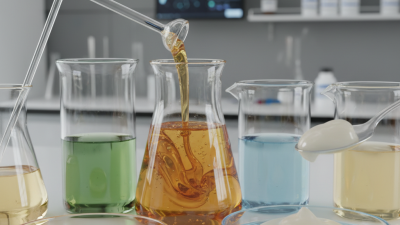
Choosing a China Top Liquid Thickener Supplier requires more than comparing prices on a product page. A reliable decision begins with the thickener’s purpose, dosage, viscosity profile, and final application. Food, cosmetics, pharmaceuticals, and industrial products may require very different performance standards. The wrong material can separate, clog equipment, or create an unpleasant mouthfeel.
Dr. Peter A. Williams, a respected hydrocolloid researcher, has emphasized, “Hydrocolloids are multifunctional ingredients, not merely thickeners.” This practical view matters when evaluating any Liquid Thickener supplier. A strong supplier should explain raw material sources, viscosity testing, storage conditions, batch consistency, and technical limitations. Ask for a complete specification sheet. Request a recent certificate of analysis. Review sample performance under your actual temperature, pH, and mixing conditions.
A polished website is not proof. Neither is the lowest quotation. Supplier audits, factory communication, traceability, and export experience provide stronger evidence. Check whether the company can support private labeling, customized viscosity, packaging, and stable delivery schedules. Small details matter, such as powder dispersion, liquid clarity, and sediment after several days.
Still, no supplier is perfect. Some technical documents may be incomplete, and test results may not match your equipment. That is why independent verification remains valuable. A careful buyer should compare at least three qualified Chinese manufacturers before deciding. Price matters, but reliability protects the entire formulation. The best choice is the supplier that proves performance consistently, communicates honestly, and improves when problems appear.
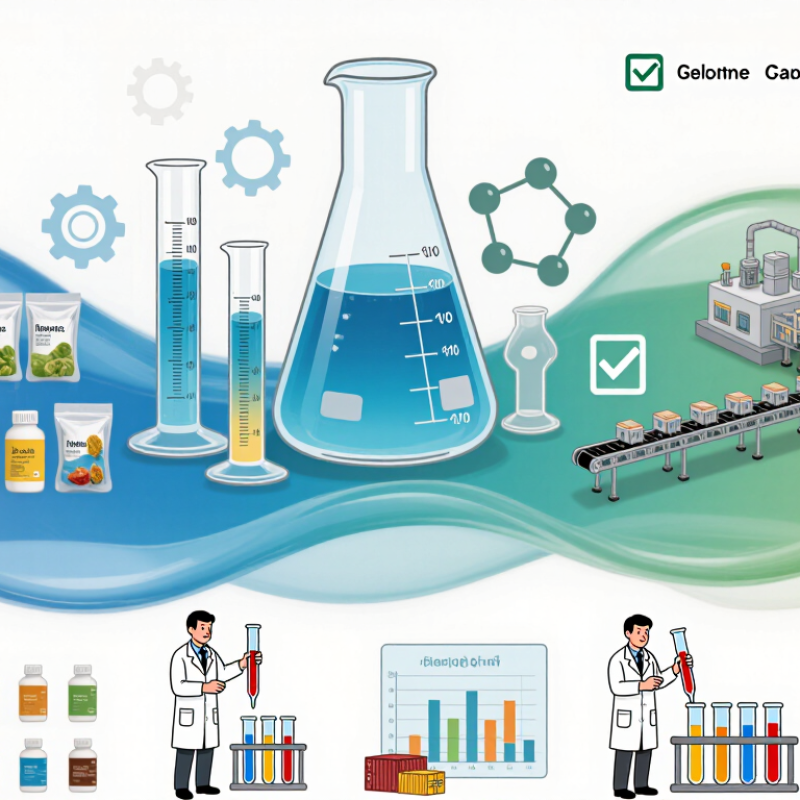
A liquid thickener is a food-grade ingredient that increases viscosity without turning a product solid. Common examples include modified starch, xanthan gum, guar gum, cellulose derivatives, and pectin. These polymers absorb water, swell, and form a loose network that slows liquid movement. Some also create shear-thinning behavior, meaning they flow easily during mixing but become thicker at rest.
The effect depends on dosage, temperature, pH, salt, and mixing energy. In production trials, a small dosing error can change pouring speed noticeably. It happens. A practical test should measure viscosity after hydration, heating, and storage, not only in a fresh sample.
A 2023 MarketsandMarkets report estimated the global hydrocolloids market at about USD 10.7 billion. Grand View Research also reported strong market growth, linked partly to demand for texture control and cleaner formulations.
Choosing a liquid thickener supplier requires more than comparing prices. Request a certificate of analysis, allergen statement, microbiological limits, and batch traceability. Check whether the supplier provides technical guidance for your pH and processing conditions. A Brookfield viscosity test can reveal consistency between lots. However, laboratory results may not match factory performance perfectly. Pilot testing remains essential. The right material should hydrate predictably, maintain stable viscosity, and avoid unwanted stringiness, cloudiness, or aftertaste.
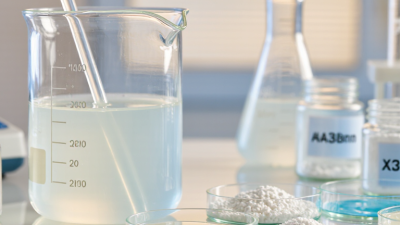
Liquid thickeners are used across industries where texture, stability, and controlled flow matter. Food and beverage manufacturers add them to sauces, dairy drinks, soups, and dressings. They improve mouthfeel, suspend particles, and reduce separation during storage. A thickener must match acidity, heating, salt levels, and processing speed. Small formula changes matter.
Cosmetic and personal-care producers use liquid thickeners in shampoos, lotions, cleansers, and gels. The right grade can create a smooth pour without leaving a sticky after-feel. Pharmaceutical formulations may use them to control suspension, dosing consistency, and product handling. These applications require documented specifications, batch testing, and careful compatibility checks. Appearance alone is not enough.
Paint, coating, detergent, textile, paper, and construction industries also depend on viscosity control. A coating should spread evenly, while a detergent needs stable flow through pumps and filling lines. When evaluating a Chinese liquid thickener supplier, request technical data, sample trials, traceability records, and quality certificates. Discuss storage conditions and lead times too. In practice, one thickener rarely fits every formula. Pilot testing may reveal unexpected haze, foaming, or poor low-temperature performance. Supplier advice is useful, but your own process should verify every claim.
When choosing a China-based liquid thickener supplier, inspect more than product photos. Ask for a current specification sheet, safety data sheet, and certificate of analysis for each batch. Check viscosity, pH, appearance, active content, storage conditions, and recommended dosage. These details should match your application, whether it involves coatings, cleaning products, or personal care formulations.
Request a representative sample before discussing large-volume orders. Test it under your actual temperature, mixing speed, and salt conditions. A supplier may report excellent laboratory results, yet your formula can behave differently. That is not always a supplier failure; your process may need adjustment. Verify factory capacity, quality controls, traceability, and production records. A polished website proves little. A video call, audit report, or independent inspection offers stronger evidence. Confirm export documents, packaging quality, lead times, payment terms, and complaint procedures in writing.
Tips: Compare at least three suppliers using the same checklist. Ask how they manage viscosity changes between batches. Check whether the shipment label matches the technical documents. Keep sealed samples from approved batches for future comparison. Communication matters too. Delayed or vague answers can signal weak technical support. Do not choose only by price; a cheaper thickener may create rework, unstable texture, or costly production delays.
China Top Liquid Thickener Supplier: How to Choose?
How to Compare Product Quality, Safety, and Certifications?
A reliable comparison starts with the thickener’s intended use. Food, cosmetics, detergents, and industrial fluids need different performance evidence. Request a recent technical data sheet, certificate of analysis, and safety data sheet. Check viscosity, pH, appearance, moisture, microbial limits, and heavy metal results where applicable. Do not rely on a sample alone. Test the same batch in your actual formula.
Traceability shows how seriously a supplier manages quality. Each container should carry a batch number, production date, net weight, and storage guidance. Ask whether the supplier keeps retention samples and investigates complaints. A clean warehouse matters too. Look for sealed packaging, dry pallets, clear labels, and controlled temperature records. Small details reveal daily discipline.
Certifications require careful reading. Verify the issuing body, certificate number, expiry date, and covered product scope. An ISO certificate may describe management systems, not product safety. Third-party laboratory reports should show methods, test dates, and laboratory qualifications. Ask for audit records when claims involve food-contact or cosmetic applications. Be cautious with perfect paperwork.
It can be overlooked.
A supplier may provide excellent documents but respond slowly to technical questions. Request a small trial order and compare batch consistency, delivery condition, and support quality. Record every result. Personal judgment can be wrong, especially when price pressure affects testing decisions. A transparent supplier will accept reasonable verification instead of avoiding specific questions.
| Evaluation Dimension | Recommended Comparison Data | Reliable Evidence to Request | Practical Acceptance Criteria | Suggested Weight |
|---|---|---|---|---|
| Product Identity and Composition | Thickener type, active content, carrier liquid, permitted additives, and intended application | Technical Data Sheet, full ingredient declaration, specification sheet, and regulatory statement | Composition is clearly disclosed and matches the application, destination-market rules, and customer formula requirements | 15% |
| Viscosity and Flow Performance | Viscosity at a defined temperature, spindle, rotational speed, concentration, and test method | Batch COA, laboratory method, sample test report, and retained-sample comparison | Results fall within the agreed specification; test conditions are identical when comparing suppliers | 15% |
| pH and Physical Stability | pH, appearance, color, odor, phase separation, sedimentation, and storage stability | Product specification, accelerated-stability data, and real-time shelf-life records | No unacceptable separation, sediment, odor change, or appearance change during the agreed storage period | 10% |
| Microbiological Safety | Total plate count, yeast and mold, specified pathogens, and preservative-control performance where applicable | Recent COA, microbiological test report, sanitation program, and environmental monitoring records | Meets the limits agreed for the product category and destination market; pathogen requirements are satisfied | 15% |
| Chemical Contaminant Control | Heavy metals, residual solvents, pesticide residues, allergens, and other application-specific contaminants | Independent laboratory report, allergen statement, non-GMO statement where relevant, and contaminant-control plan | Results comply with applicable legal limits and the buyer's more stringent internal specifications | 10% |
| Batch-to-Batch Consistency | Variation in viscosity, solids or active content, pH, color, odor, and microbiological results | Three or more consecutive batch COAs, control charts, and approved sample records | All tested batches meet the same approved specification without unexplained deviations | 10% |
| Food, Cosmetic, or Industrial Compliance | Regulatory status based on the exact end use and importing country | Regulatory declaration, food-contact statement where applicable, SDS, technical dossier, and export documents | The product is legally suitable for the intended use; certificates are current and cover the correct facility and product scope | 10% |
| Management-System Certifications | ISO 9001, HACCP, ISO 22000 or FSSC 22000, GMP, and other relevant systems | Valid certificate, certification body, certificate number, scope, covered site, and expiry date | Certificate is independently verifiable and specifically covers the manufacturing site and relevant product category | 10% |
| Traceability and Recall Capability | Raw-material origin, production date, lot coding, retention samples, and recall procedure | Traceability test record, recall procedure, mock-recall result, and lot-label sample | A finished lot can be traced to raw materials, processing records, packaging, and shipment documentation | 5% |
| Packaging and Transportation | Container material, seal integrity, net weight, leak resistance, temperature limits, and transport conditions | Packaging specification, compatibility statement, loading photos, and transport instructions | Packaging is compatible with the formulation and prevents leakage, contamination, and unacceptable temperature exposure | 5% |
| Supplier Technical Support | Sample development, dosage guidance, troubleshooting, change notification, and complaint response | Technical service procedure, response-time commitment, formulation guidance, and corrective-action records | Supplier provides documented support and timely corrective action without changing specifications informally | 5% |
| Total Evaluation Weight | 100% | |||
China Top Liquid Thickener Supplier How to Choose?
Choosing a liquid thickener supplier requires more than comparing the lowest quotation. Review the active content, viscosity range, packaging, minimum order quantity, and delivery terms. Ask for a recent technical data sheet and batch certificate. A reliable supplier should explain testing methods clearly. Trial samples matter. They reveal flow, mixing time, odor, and stability under your actual process conditions.
Customization also deserves careful evaluation. Confirm whether the supplier can adjust concentration, viscosity, packaging size, and delivery schedule. Ask how changes are recorded and approved. Good technical support should include formula guidance, application testing, troubleshooting, and responsive communication after the order. Pricing can change with raw materials, but unexplained fees create risk. A low quote may exclude testing or special packaging. That mistake is easy to miss.
Tips: Compare at least three written quotations. Request the same sample specification from each supplier. Check response time with a technical question. Examine whether documents are complete and consistent. Do not trust polished promises alone. Ask for references or production evidence when possible. One practical weakness is relying too heavily on samples; a sample may perform well while later batches vary. Include batch consistency checks, acceptance limits, and corrective-action terms in the purchase agreement. Supplier support should be measured before problems appear, not after.