Liquid Thickener Tips for Effective Use in Food Production?
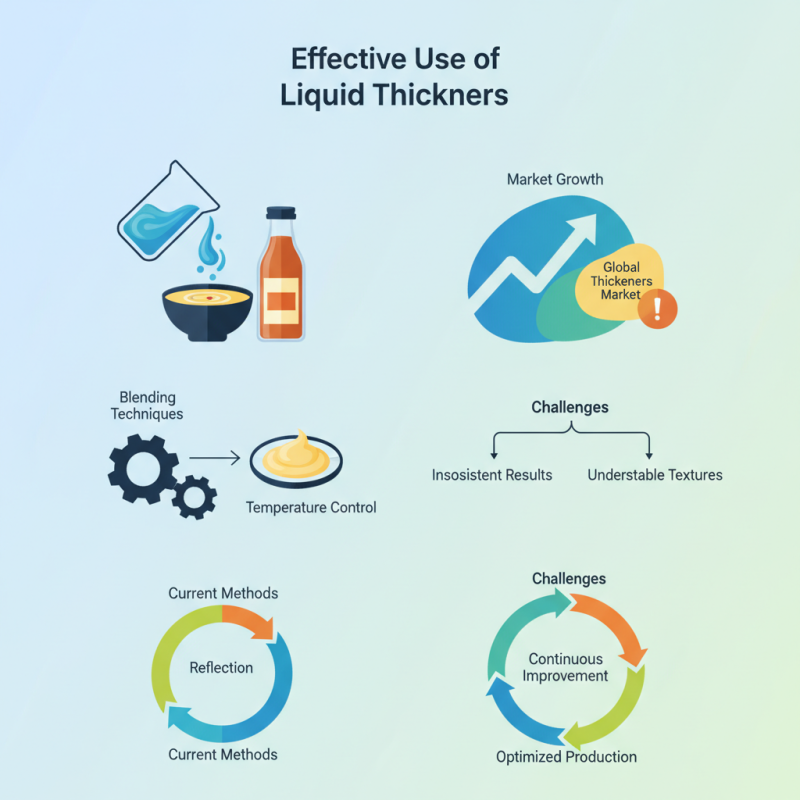
The application of Liquid Thickener in food production is increasingly crucial. Reports indicate that the global thickeners market is projected to reach $11 billion by 2027. This growth underscores the rising demand for thickening agents in various food applications, from soups to sauces.
Liquid thickeners are favored for their versatility and ease of use. However, effective utilization requires an understanding of their characteristics. Improper use can lead to undesirable textures or flavors. According to industry studies, many food manufacturers struggle with achieving the target viscosity while maintaining product quality.
Implementing best practices for Liquid Thickener can streamline production processes. Many producers overlook key factors, such as blending techniques and temperature control. These elements significantly impact the final product. A lack of attention to detail can lead to inconsistent results. This highlights the need for continuous improvement and reflection on current methods in food production.
Understanding Liquid Thickeners: Types and Their Applications
Liquid thickeners play a crucial role in food production. Understanding the types available can improve your culinary results. Starches, gums, and proteins are common thickeners. Each has unique properties that affect viscosity and texture. For example, cornstarch is widely used for sauces. It thickens quickly when heated, providing a glossy finish.
Gums, like xanthan gum, offer versatility. They work well at low temperatures and provide stability. This makes them ideal for dressings and dairy products. On the other hand, some thickeners can be tricky to work with. Adding too much can lead to a gummy texture, which may ruin the dish. It's essential to experiment and adjust your recipes accordingly.
Proteins such as gelatin can create rich textures. However, they require proper heating and cooling to set correctly. Too little can result in runny dishes. Testing different thickeners can lead to surprising outcomes. A hands-on approach allows for learning. Mistakes can provide valuable insights into achieving the desired consistency.
Liquid Thickener Tips for Effective Use in Food Production
| Type of Thickener |
Application |
Usage Tips |
Recommended Dosage |
Notes |
| Cornstarch |
Gravies, Sauces |
Mix with cold water before adding to hot liquids |
1 tablespoon per cup |
Can break down with long cooking times |
| Xanthan Gum |
Dressings, Smoothies |
Sprinkle gradually while whisking |
0.5 to 1% of total weight |
Provides a smooth texture |
| Guar Gum |
Baked Goods, Ice Cream |
Mix with dry ingredients before adding liquids |
1 to 2 teaspoons per cup |
Great for freeze-thaw stability |
| Agar-Agar |
Jellies, Desserts |
Dissolve in boiling liquid for best results |
1 teaspoon per cup |
Vegetarian alternative to gelatin |
Choosing the Right Liquid Thickener for Your Food Products
When selecting the right liquid thickener for your food products, consider the texture and viscosity you aim for. Different thickeners work distinctively in various food applications. For sauces, a smooth, glossy finish often requires a starch-based thickener. In contrast, soups may benefit from a thicker consistency achieved using gums or pectins. Each thickener has its own unique properties, so experimenting is crucial.
The functionality of a thickener can be influenced by temperature and pH. Some thickeners may not perform well under high heat or acidic conditions. For instance, certain gelatin products can lose their thickening ability if boiled too long. Testing small batches before full production can save time and resources.
Flavor and appearance are also significant. A poorly chosen thickener may alter the taste profile or visual appeal of your dish. Careful balancing ensures the thickener enhances rather than overwhelms. Understanding these factors can lead to better food production outcomes.
Guidelines for Measuring and Blending Liquid Thickeners
When measuring liquid thickeners, precision is key. Use a scale for accuracy, especially in large batches. For small quantities, a measuring spoon can work, but it's less reliable. Remember, even a slight variation can alter the final texture of your dish.
Blending liquid thickeners requires a careful approach. Start by mixing the thickener with a small amount of liquid to create a slurry. This prevents clumps in your final product. Gradually incorporate the slurry into the larger volume of liquid. Stir continuously to ensure smooth integration.
Don’t be afraid to experiment with different thickeners. Each type behaves uniquely, impacting taste and texture. Sometimes, the results may not be what you expect. Reflect on these outcomes to refine your technique. Adjustments may be necessary for future uses, keeping your cooking evolving and improving.
Common Mistakes to Avoid When Using Liquid Thickeners
Using liquid thickeners can transform your dishes, but common mistakes often hinder their effectiveness. One frequent error is adding the thickener too early. When added too soon, the thickener may not hydrate properly, leading to a grainy texture instead of a smooth consistency. It's crucial to wait until your dish is near completion before incorporating the thickener. This allows it to blend seamlessly, enhancing the overall mouthfeel.
Another pitfall is not properly measuring the thickener. Overestimating the amount can produce an undesirable, overly viscous end product. Many chefs recommend using a scale for accuracy. Additionally, some may overlook the importance of mixing. If the thickener is not thoroughly stirred into the dish, clumps may form, resulting in an uneven texture. Taking time to ensure even distribution is vital for achieving the desired thickness.
Lastly, understanding the cooking time is essential. Liquid thickeners often require heat to activate fully. Skipping this step can result in dishes that feel watery. Patience is key. Allow your dish to simmer for several minutes after adding the thickener. This not only improves the texture but also allows flavors to meld beautifully. These small adjustments can make a significant difference in your final dish.
Common Mistakes to Avoid When Using Liquid Thickeners in Food Production
This chart illustrates the most common mistakes encountered in food production when using liquid thickeners, highlighting areas to focus on to enhance effectiveness.
Enhancing Flavor and Texture with Proper Thickener Usage
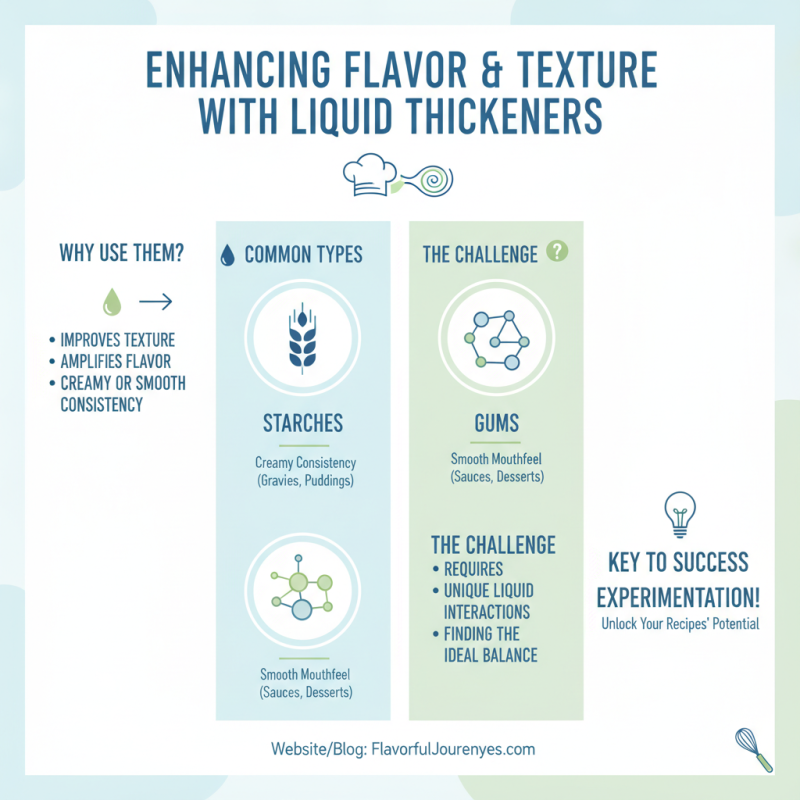
Using liquid thickeners can significantly enhance your food products. The right thickener improves texture and amplifies flavor. However, mastery of these thickeners requires experience. Different liquids interact uniquely with thickeners. For instance, starches create a creamy consistency, while gums yield a smooth mouthfeel. Experimentation is key to finding the ideal balance for your recipes.
Consistency is crucial when using thickeners. Too much can lead to a gloopy texture, while too little may leave dishes watery. It's essential to gradually add thickener while continuously stirring. This helps achieve a uniform texture throughout the dish. Monitor the thickness closely; it can change quickly with heating. Learning to achieve the right thickness takes practice and patience.
The choice of thickener can also affect flavor. Some thickeners carry a neutral taste, while others may impart distinct flavors. Understanding these nuances is vital. For instance, using a fruit-based thickener can enhance sweet dishes but may overwhelm savory ones. Keeping a detailed log of your experiments will aid future recipes. Revisit and refine your process over time.