Top Nonionic Surfactant Uses Benefits and Applications Explained
Nonionic surfactants play a crucial role in various industries. Their versatility makes them valuable in cleaning, personal care, and agriculture. Unlike ionic surfactants, nonionic surfactants do not carry a charge. This feature allows them to work effectively in a wide range of pH levels and water hardness.
The most notable benefit of nonionic surfactants is their ability to reduce surface tension. This property enhances the spreading and wetting abilities of liquids. For instance, they improve the effectiveness of detergents and emulsifiers. However, the selection of the right nonionic surfactant can be challenging. Factors such as compatibility and stability must be considered. Choosing the wrong type can lead to suboptimal performance.
Their applications are numerous. In household products, nonionic surfactants ensure better cleaning power. In the cosmetic industry, they serve as emulsifiers and stabilizers. However, their ecological impact requires ongoing research. As industries seek sustainable options, understanding the benefits and limitations of nonionic surfactants becomes essential.
Top Nonionic Surfactant Uses in Household Products and Cleaners
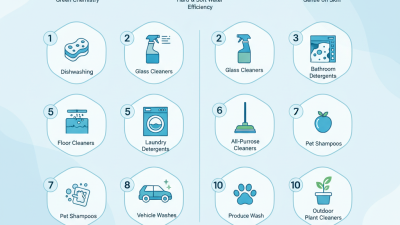
Nonionic surfactants play a vital role in household cleaning products. They are effective at breaking down grease and removing stains, making them a popular choice in formulations. These surfactants reduce surface tension, allowing water to mix better with oils and dirt. Their mild nature makes them suitable for various surfaces, including fabrics and hard surfaces. Many consumers prefer them due to their lower toxicity compared to ionic surfactants.
In cleaners, nonionic surfactants enhance performance without harming the environment. They are less likely to cause skin irritation, making them ideal for personal care products as well. These surfactants can also work effectively in different pH levels, broadening their application range. However, not all nonionic surfactants are created the same. Some may not perform well under specific conditions, which requires careful formulation.
Remarkably, their versatility extends to laundry detergents and dishwashing liquids. Nonionic surfactants help in maintaining the brightness of colors and the freshness of fabrics. Yet, the evolving nature of cleaning challenges necessitates ongoing research. As consumer expectations grow, it is crucial to evaluate the effectiveness continuously. Balancing performance with safety and sustainability remains a significant task.
Top Nonionic Surfactant Uses, Benefits and Applications
| Use/Application |
Description |
Benefits |
Typical Concentration |
| Household Cleaners |
Used in all-purpose cleaners for effective soil removal. |
Non-toxic, biodegradable, and effective in hard and soft water. |
5-15% |
| Laundry Detergents |
Enhances cleaning performance in detergents. |
High stain removal efficiency and fabric care. |
2-10% |
| Personal Care Products |
Emulsifiers in shampoos and lotions for a smooth texture. |
Improves product aesthetics and skin compatibility. |
1-5% |
| Agricultural Surfactants |
Adjuvants to enhance pesticide effectiveness. |
Improved coverage and penetration of active ingredients. |
0.1-2% |
| Food Processing |
Used as emulsifiers and stabilizers in food products. |
Enhances texture and mouthfeel of food. |
0.1-3% |
Benefits of Nonionic Surfactants in Personal Care Formulations
Nonionic surfactants play a crucial role in personal care formulations. These substances, characterized by their lack of charge, effectively reduce surface tension. This property contributes to product stability and enhanced performance in various applications. In skin care, nonionic surfactants help to create smooth textures and improve spreadability. They can also aid in solubilizing active ingredients, making products more effective.
Another benefit of nonionic surfactants is their mildness. They are less likely to irritate the skin compared to their ionic counterparts. This characteristic makes them ideal for sensitive skin formulations. Nonionic surfactants also have good compatibility with other ingredients. They can enhance foaming and cleansing without compromising the final product’s integrity. However, their performance can vary based on concentration and formulation.
Despite their advantages, challenges exist. Not all nonionic surfactants are biodegradable, raising environmental concerns. Additionally, formulators must carefully balance the concentrations to avoid adverse effects. This requires a deep understanding of surfactant behavior and interactions with other ingredients. Achieving optimal formulations may involve trial and error, highlighting the need for expertise in this field.
Applications of Nonionic Surfactants in Food Industry and Processing
Nonionic surfactants have a significant role in the food industry. They serve as emulsifiers, stabilizers, and dispersants, enhancing product quality and shelf life. According to the American Chemical Society, these surfactants improve the texture and consistency of food products. For instance, they help in creating stable emulsions in salad dressings and sauces.
In food processing, nonionic surfactants assist in the absorption of flavors and enhance moisture retention. A survey by Food Technology Magazine indicates that nearly 75% of food manufacturers utilize such surfactants to improve product stability. However, relying heavily on nonionic surfactants requires careful consideration of their impact on health and environment.
Tips: Always check for food-grade certifications when selecting surfactants. Understand the specific functions they serve in your product formulation. It’s crucial to strike a balance between using these additives and maintaining natural qualities of food. Explore the environmental footprint of your choices to ensure sustainability.
Environmental Impact and Biodegradability of Nonionic Surfactants
Nonionic surfactants are essential in various industries, especially for their environmental friendliness. Unlike anionic and cationic surfactants, nonionic types do not carry a charge, which often results in lower toxicity levels. A report from the Environmental Protection Agency highlights that nonionic surfactants typically break down more readily in aquatic environments, reducing their potential ecological footprint. Their biodegradability is pivotal for industries aiming to meet strict regulatory standards.
Recent studies reveal that nonionic surfactants can achieve over 90% biodegradation within 28 days. This high rate enhances their appeal in applications ranging from household cleaners to industrial processes. However, the environmental benefits do not solely rest on biodegradability. Concerns about the byproducts created during their degradation persist. Some studies suggest that certain degradation products might retain toxicity or other undesirable properties.
The continuous use of nonionic surfactants raises questions about cumulative environmental effects. While they appear less harmful initially, the long-term implications on ecosystems remain uncertain. Ongoing research is crucial in evaluating the complete life cycle of these compounds to ensure sustainable practices. Balancing efficacy and environmental impact remains a challenge for manufacturers.
Future Trends: Innovations in Nonionic Surfactant Technologies
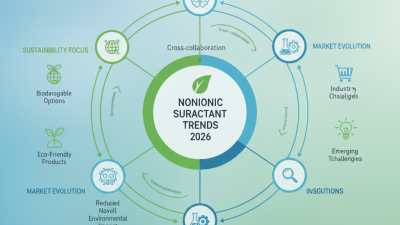
The landscape of nonionic surfactant technologies is evolving rapidly. Market insights show that the global nonionic surfactants market is projected to reach $16 billion by 2025, growing at a CAGR of 4.5%. Innovations in production processes are improving efficiency. Sustainable bio-based alternatives are gaining traction, addressing both regulatory pressures and consumer demand for greener products.
Researchers are exploring new formulations that enhance performance while reducing environmental impact. For instance, advancements in enzyme-assisted synthesis are leading to more efficient surfactant production. This innovation not only cuts costs but also lowers energy consumption.
However, challenges remain. The transition from traditional surfactants to greener alternatives requires careful consideration. Some bio-based surfactants may not perform as well in extreme conditions. These limitations need to be addressed through ongoing research and development. Achieving sustainability without compromising quality is a balancing act that demands collaboration across the industry.
Top Nonionic Surfactant Uses Benefits and Applications