Amino Acid Surfactant is changing how formulators approach cleansing, foaming, and skin comfort. These ingredients combine amino acid chemistry with fatty-acid chains. Their molecular structure contains a water-loving head and an oil-attracting tail. This design helps lower surface tension and form micelles around sebum, dirt, and cosmetic residues.
In practical formulation work, the difference is visible in a cleanser’s after-feel. A well-balanced formula can produce fine foam, rinse cleanly, and leave less tightness on the skin. The mechanism is not magic. Surfactant molecules gather at the air-water interface, then surround oily materials inside micelles. Amino acid-based structures may support mild cleansing, but performance depends on pH, concentration, chain length, and the complete formula.
Market evidence supports growing interest in gentler and bio-based cleansing systems. Grand View Research valued the global surfactants market at approximately USD 46.36 billion in 2023. The same report projects continued growth through 2030. However, broad market reports rarely separate amino acid surfactants from every other surfactant category. That limitation matters.
The outlook is promising, but not spotless. Amino Acid Surfactant systems can cost more and may require careful foam optimization. Hard water can also change sensory performance. Responsible evaluation should include irritation testing, biodegradation data, stability results, and supplier documentation. Reports from ISO, OECD, and cosmetic safety authorities can strengthen those assessments. This article examines how these surfactants work, where they perform well, and why formulation evidence still matters more than marketing language.
What Is Amino Acid Surfactant and How Does It Work?
Definition and INCI Scope: What Qualifies as an Amino Acid Surfactant
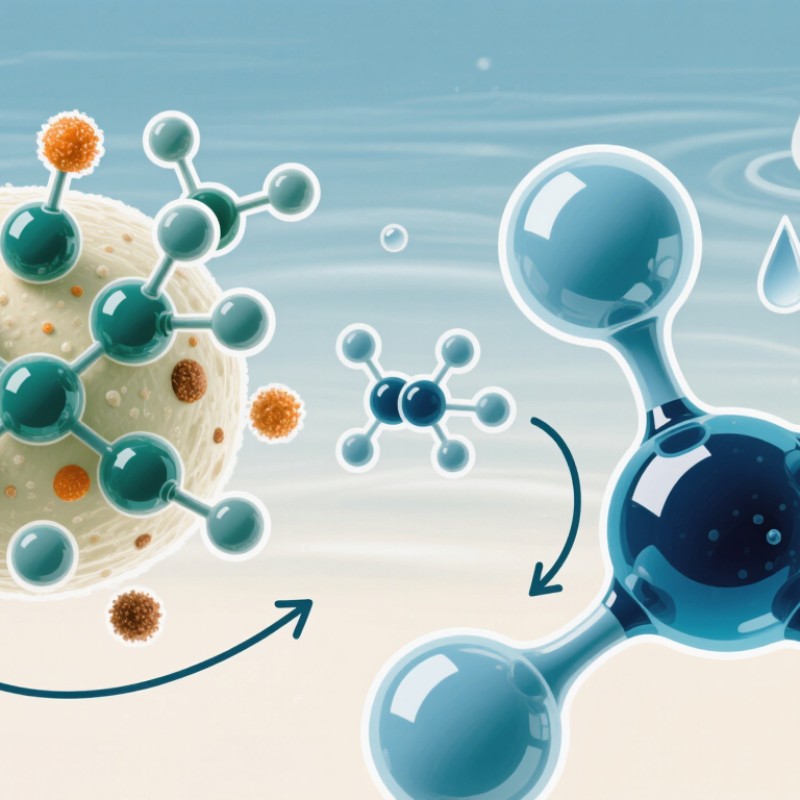
An amino acid surfactant is a cleansing ingredient derived partly from an amino acid. Its structure usually combines an amino acid portion with a fatty acyl group. This creates a water-loving head and an oil-attracting tail. The molecule can then surround sebum, dust, and styling residue in water. Rinsing removes these small cleansing structures from the skin or hair.
The INCI scope requires careful reading. Common families include acyl glutamates, acyl sarcosinates, acyl alaninates, and acyl glycinate salts. However, an ingredient does not qualify simply because its name contains “amino” or “acid.” INCI is a standardized naming system, not a mildness certificate. The complete chemical structure, manufacturing route, and declared INCI name matter. Supplier documents should confirm the ingredient’s identity and composition.
Formulators also examine pH, concentration, counter-ions, and the whole surfactant blend. A glutamate-based cleanser may feel gentle in one formula but less comfortable in another. Water hardness can change foam and rinsability. That detail is often overlooked. I would avoid calling every amino-acid-derived cleanser automatically gentle. Real performance depends on testing, not attractive wording. Patch testing, stability checks, and rinse-feel evaluations provide more reliable evidence than the ingredient name alone.
Amino acid surfactants combine a hydrophobic fatty acyl chain with a polar head group derived from an amino acid or an amino-acid-related compound. The chart compares representative INCI names by the number of carboxyl groups present in their amino-acid-derived head group. Glutamate-based surfactants contain two carboxyl groups, while glycinate- and sarcosinate-based surfactants contain one. This structural count helps explain charge and water interaction, but it is not a direct measure of cleansing strength, mildness, or biodegradability.
What Is Amino Acid Surfactant and How Does It Work?
Molecular Design: Amino Acid Headgroups, Tails, Charge, and CMC
An amino acid surfactant combines a hydrophilic amino acid headgroup with a water-avoiding hydrocarbon tail. The headgroup influences solubility, skin feel, biodegradation, and interaction with proteins. The tail drives association in water. Longer tails usually strengthen hydrophobic attraction, but they can also reduce formulation flexibility.
Charge depends strongly on pH. Some headgroups are anionic, while others can behave as zwitterions. Near their isoelectric region, charge balance may reduce electrostatic repulsion. This can change foam, clarity, and mildness. Counterions matter too. A small change in salt concentration may alter micelle shape or viscosity. The molecular picture is useful, but not perfectly tidy.
The critical micelle concentration, or CMC, marks the point where extra surfactant increasingly forms micelles instead of remaining as individual molecules. Below the CMC, surface tension usually falls sharply. Above it, the curve becomes less dramatic. Temperature, water hardness, pH, tail branching, and impurities can shift the measured value. In practical development, conductivity and surface-tension tests should support each other. One method alone can mislead. A formulation may show a low CMC yet perform poorly during rinsing. That is why molecular design must be checked against real washing conditions, not only laboratory numbers.
Amino acid surfactants combine an amino-acid-derived hydrophilic head with a water-repelling fatty chain. This structure helps water spread across oily or dusty surfaces. Their cleaning action begins at the interface.
When enough molecules enter water, they gather into micelles. The hydrophobic tails point inward, while the charged or polar heads remain in contact with water. These tiny structures can surround grease, skin oil, and fine particles. Micelles are not simply “dirt magnets.” Their performance depends on concentration, pH, temperature, and water hardness. Below the critical micelle concentration, individual molecules mainly improve wetting. Above it, micelles support more effective soil dispersion. The boundary between water and oil becomes less resistant. Lower interfacial tension allows the cleaning solution to enter narrow gaps, such as fabric fibers or uneven skin surfaces.
Gentle movement then loosens the soil. Rubbing a damp cloth creates shear, while rinsing carries suspended material away. In laboratory evaluations, formulators often measure surface tension, foam behavior, detergency, and residue after rinsing. Foam can look impressive, but it does not always indicate stronger cleaning. That is an easy mistake. A formula may produce rich foam yet remove oily soil poorly in hard water. Amino acid surfactants can offer mild cleansing, but “mild” is not automatic. Excess surfactant, unsuitable pH, or incomplete rinsing may still cause residue or irritation. Real performance must be checked on the actual surface, with realistic soil and water conditions.
| Dimension | What It Means | Typical Data or Behavior | Role in Cleaning Performance |
|---|---|---|---|
| Definition | An amino acid surfactant is an amphiphilic molecule made by combining an amino-acid-derived polar group with a hydrophobic fatty-acid or alkyl chain. | It contains both a water-attracting region and an oil- or soil-attracting region. | This dual structure enables the surfactant to spread at interfaces, form micelles, and help remove oily or particulate soils. |
| Hydrophilic head group | The polar head interacts strongly with water through ionic or hydrogen-bonding interactions. | Depending on molecular design and pH, the head may be anionic, cationic, zwitterionic, or partially ionized. | Head-group charge influences water solubility, adsorption to surfaces, foam behavior, and compatibility with other ingredients. |
| Hydrophobic tail | The nonpolar chain avoids water and preferentially associates with oils, grease, sebum, and other hydrophobic materials. | Longer alkyl chains generally increase hydrophobic attraction but can also increase the concentration needed for dissolution. | The tail helps loosen oily soil and place it inside the hydrophobic region of a micelle or emulsion droplet. |
| Amphiphilicity | An amphiphile has chemically different regions that prefer different environments. | Amino acid surfactants orient their polar heads toward water and their nonpolar tails toward air, oil, or other hydrophobic phases. | This orientation is the basis for surface adsorption, wetting, emulsification, and soil dispersion. |
| Critical micelle concentration (CMC) | The CMC is the approximate surfactant concentration at which micelles begin to form in a given solution. | There is no single universal CMC for all amino acid surfactants; it varies with molecular structure, temperature, pH, ionic strength, and water hardness. | Below the CMC, added surfactant mainly occupies interfaces. Above the CMC, additional surfactant increasingly forms micelles in the bulk liquid. |
| Micelle formation | Micelles are aggregates in which hydrophobic tails cluster away from water while hydrophilic heads remain in contact with water. | Micelles are dynamic structures that continuously exchange surfactant molecules with the surrounding solution. | They can solubilize oily materials, keep loosened soil dispersed, and reduce redeposition on a cleaned surface. |
| Surface tension | Surface tension is the energy required to increase the area of a liquid surface. | The surface tension of clean water is approximately 72 mN/m at room temperature. Surfactants commonly lower aqueous surface tension, often into the approximate 25–40 mN/m range depending on formulation and concentration. | Lower surface tension helps a cleaning solution spread more readily across fabrics, skin, hair, and hard surfaces. |
| Interfacial tension | Interfacial tension is the resistance to creating contact area between two immiscible phases, such as oil and water. | Surfactant molecules adsorb at the oil–water boundary and reduce the energetic penalty of that contact. | Lower interfacial tension makes it easier for water to penetrate oily soil, fragment it, and disperse it into smaller droplets. |
| Wetting and spreading | Wetting describes how effectively a liquid makes contact with a solid surface. | A lower contact angle generally indicates better spreading and wetting on a compatible surface. | Improved wetting allows the cleaning liquid to reach more of the soil–surface boundary and increases contact with residues. |
| Soil release | Soil release is the detachment of oily, particulate, or mixed residues from a surface. | Surfactants can weaken soil–surface adhesion through adsorption, wetting, swelling of residues, and reduction of interfacial forces. | Mechanical action such as rubbing, agitation, or rinsing then removes the loosened soil more efficiently. |
| Emulsification | Emulsification is the formation and stabilization of small oil droplets in water, or water droplets in oil. | A surfactant film surrounds newly formed droplets and helps slow their coalescence. | Oily soil can be converted into rinseable droplets rather than remaining as a continuous film on the cleaned surface. |
| Particulate soil removal | Particulate soils include dust, mineral particles, pigments, and other solid matter. | Surfactant adsorption can change surface charge and hydration, helping particles detach and remain dispersed. | Stable dispersion reduces particle aggregation and lowers the likelihood of redeposition during rinsing. |
| pH dependence | The ionization state of an amino-acid-derived head group can change with pH. | Changes in pH may alter charge density, solubility, CMC, foam, adsorption, and compatibility with other ingredients. | Cleaning performance should be evaluated at the actual use pH rather than inferred from structure alone. |
| Water hardness and electrolytes | Calcium, magnesium, sodium, and other ions can influence surfactant behavior in water. | Electrolytes may compress electrical double layers, change aggregation, or reduce solubility for some charged surfactants. | Water hardness can affect clarity, foam, rinsability, and cleaning consistency, so testing in representative water is important. |
| Foam formation | Foam consists of gas bubbles surrounded by liquid films stabilized by surfactant molecules. | Foam level depends on surfactant structure, concentration, water quality, temperature, agitation, and other formulation components. | Foam can improve consumer perception and contact time, but high foam does not necessarily indicate superior soil removal. |
| Rinsing and redeposition | After soil is detached, it must remain dispersed until it is removed by rinsing or drainage. | Hydrophilic heads help maintain contact with water while micelles or dispersed droplets carry hydrophobic material away. | Good dispersion and rinsability help prevent loosened soil from returning to fabrics, hair, skin, or hard surfaces. |
| Overall cleaning sequence | Amino acid surfactants work through several linked physical and chemical steps rather than through one single mechanism. | Typical sequence: wetting → adsorption at interfaces → reduction of surface and interfacial tension → soil loosening → micellar solubilization or emulsification → dispersion → rinsing. | The final result depends on surfactant structure, concentration, pH, temperature, water hardness, soil type, contact time, and mechanical action. |
Note: The numerical values shown are general reference ranges. Actual surface tension, interfacial tension, CMC, foam, and cleaning performance vary with molecular structure, concentration, temperature, pH, ionic strength, water hardness, and formulation composition.
Amino acid surfactants combine a fatty chain with an amino-acid-derived head group. This structure lowers water’s surface tension and lifts oily soil. ASTM D1173 measures foam using the Ross-Miles method, reporting foam height immediately and after five minutes. In practical screening, a stable 120–180 mm foam may look impressive.
Foam is seductive. It does not prove mildness.
CMC, or critical micelle concentration, shows when additional surfactant mainly forms micelles. Published formulation studies commonly report CMC values from approximately 0.01 to 1 g/L for tested amino-acid surfactants. Results change with chain length, salt level, temperature, and water hardness. Therefore, one CMC value cannot represent every batch. ASTM D1173 and CMC testing answer different questions: foam behavior versus aggregation efficiency.
Finished cleansers often target pH 4.5–5.5, close to the skin’s acidic surface range reported in dermatology literature. However, the raw material may arrive at a different pH. Measure the complete formula, not only the surfactant solution. Mildness needs separate evidence, including zein dissolution, red-blood-cell compatibility, transepidermal water-loss testing, and repeat-insult studies. Lower zein dissolution generally suggests less protein disruption, but methods are not directly interchangeable. The Cosmetic Ingredient Review and OECD skin-testing guidance both support careful, endpoint-specific interpretation.
A useful warning remains: low foam, low irritation, and high cleansing power may not occur together. Formulators must choose the trade-off deliberately.
An amino acid surfactant combines an amino-acid-derived polar group with a water-repelling tail. This dual structure matters. In water, these molecules gather at interfaces, lower surface tension, and form micelles around oily soil. During washing, micelles help lift grease from fabric or skin, while the polar heads keep soil dispersed. Performance changes with pH, salt, temperature, and concentration.
The OECD TG 301 series provides a practical screening benchmark for ready biodegradability. A 60% result within 28 days may indicate substantial microbial conversion, but the pass criterion depends on the selected method. Some methods measure oxygen consumption, carbon dioxide evolution, or dissolved organic carbon removal. They are not interchangeable. Inoculum quality, test concentration, and sample preparation can affect the result.
From a formulation and quality perspective, I would request the complete test report, not only a headline percentage. It should identify the OECD method, substance identity, concentration, controls, endpoint, and ten-day window. A surfactant may biodegrade well in a laboratory bottle yet behave differently in cold, salty wastewater. That gap deserves attention. Biodegradable does not automatically mean harmless, non-toxic, or environmentally superior. Independent review and repeat testing make the claim more reliable.