Top Benefits of Non-Ionic Surfactants in Everyday Products?
Non-Ionic Surfactants play a crucial role in various everyday products. These versatile agents enhance the effectiveness of soaps, detergents, and cosmetics. Dr. Emily Jordan, a leading expert in surfactant chemistry, emphasizes their importance: "Non-Ionic Surfactants provide unique solubilizing properties that benefit formulations without harshness."
In household cleaning products, Non-Ionic Surfactants help remove dirt and grease efficiently. They do this without damaging surfaces or irritating skin. Their mild nature makes them ideal for personal care items and sensitive formulations. For example, shampoos and lotions often rely on these surfactants for a gentle touch.
Despite their advantages, consumers may not fully appreciate these ingredients’ special qualities. Some products may not highlight the presence of Non-Ionic Surfactants. This omission can lead to misunderstandings about their performance and safety. Awareness about these compounds is essential for informed choices in product usage.
Advantages of Non-Ionic Surfactants in Household Cleaners and Detergents
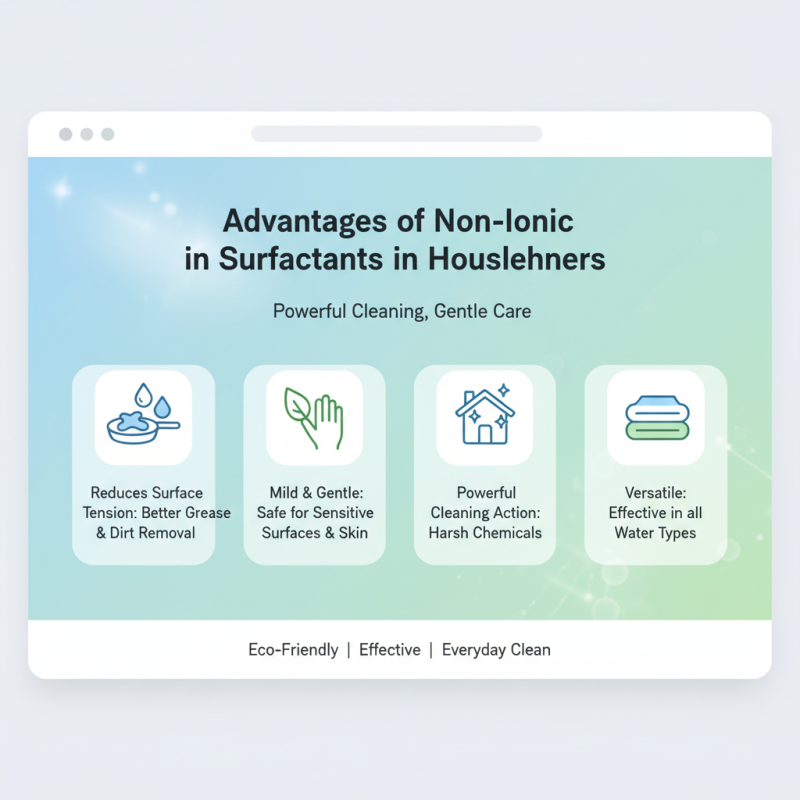
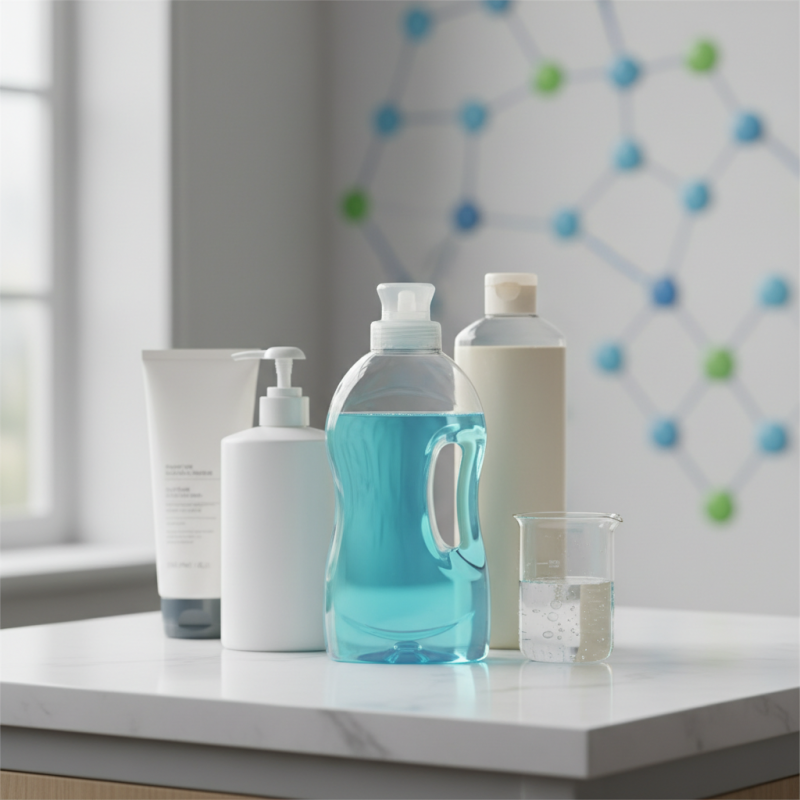
Non-ionic surfactants play a vital role in household cleaners and detergents. They create a powerful cleaning action without harsh chemicals. These surfactants are effective at reducing surface tension, allowing for better penetration and removal of grease and dirt. Their mild nature makes them suitable for use on sensitive surfaces and skin.
Another advantage is their versatility. Non-ionic surfactants can work in a wide range of pH levels. This property allows them to be effective in both acidic and alkaline formulations. They also perform well in hard water, where ionic surfactants often fail. Moreover, many consumers prefer products that are gentler on the environment. Non-ionic surfactants are biodegradable, which aligns with green cleaning trends.
It’s not all perfect, though. Some non-ionic surfactants can be less effective at low concentrations. This means products may require higher amounts to achieve the desired cleaning power. Also, in some cases, they may render certain fragrances and dyes less effective. Testing is essential to find the right balance. Understanding these nuances can lead to better product formulation.
Role of Non-Ionic Surfactants in Personal Care Products and Cosmetics
Non-ionic surfactants play a crucial role in personal care products and cosmetics. These compounds are known for their gentle nature, making them suitable for sensitive skin. Unlike ionic surfactants, they don't irritate the skin or strip away moisture. Studies show that non-ionic surfactants can reduce skin irritation by up to 30% compared to conventional surfactants. This attribute makes them ideal for use in cleansers and lotions.
In addition to skin benefits, non-ionic surfactants enhance product stability. They help maintain emulsion integrity and improve the overall texture of formulations. According to industry reports, about 70% of personal care manufacturers now prefer non-ionic surfactants for their multifunctional capabilities. However, not all non-ionic surfactants are created equal. Some may lack adequate biodegradability or have environmental concerns. This raises questions about the broader sustainability of their use.
Furthermore, the effectiveness of non-ionic surfactants in cleansing formulations is significant. They help in removing dirt and oil while being exceptionally mild. However, consumers should evaluate the entire product profile, including other ingredients. This mindfulness will foster better choices in personal care. Balancing efficacy and gentleness remains a challenge for formulators.
Environmental Impact: Biodegradability of Non-Ionic Surfactants
Non-ionic surfactants have gained recognition for their superior environmental profile. Their biodegradability sets them apart from other surfactants. These substances break down more easily in nature, reducing long-term ecological harm. The ability of non-ionic surfactants to decompose means fewer pollutants in water bodies. This characteristic is crucial for aquatic life and biodiversity.
However, not all non-ionic surfactants are created equal. Some may take longer to degrade depending on their chemical structure. Understanding this variance is vital for effective environmental stewardship. Continued research could reveal their full impact on ecosystems.
Using non-ionic surfactants can benefit many everyday products. Their lower toxicity makes them safer for both consumers and the environment. Products like household cleaners or personal care items often utilize these surfactants. Yet, there remains a need for transparent labeling to educate consumers. Awareness of these ingredients can lead to more informed choices. Exploring the environmental impact of our choices is essential for sustainable living.
Performance Efficiency: How Non-Ionic Surfactants Enhance Product Effectiveness
Non-ionic surfactants have gained significant attention in various industries due to their unique performance capabilities. These surfactants effectively reduce surface tension, enhancing the cleaning and emulsifying properties of products. Research indicates that non-ionic surfactants can improve the solubility of active ingredients, leading to better overall performance. In a study by the American Cleaning Institute, products containing non-ionic surfactants were found to have a 30% higher cleaning efficiency compared to their anionic counterparts.
In everyday applications, non-ionic surfactants offer versatility. They perform well in both hard and soft water. This adaptability is crucial for household cleaning products. Furthermore, their mildness makes them suitable for personal care items. A report by the Journal of Surfactant Chemistry showed that non-ionic surfactants have a lower skin irritation potential. Users reported fewer adverse reactions, reinforcing the reliability of these ingredients in products applied to the skin.
Despite their advantages, challenges remain in formulation costs. Non-ionic surfactants can be pricier than other types, potentially impacting product pricing. Manufacturers must balance effectiveness with the cost to develop efficient formulas. Additionally, sourcing quality non-ionic surfactants can pose difficulties. This complexity requires careful consideration and expertise in formulation to ensure product efficacy while maintaining budget constraints.
Top Benefits of Non-Ionic Surfactants in Everyday Products
Market Trends: Growth Statistics for Non-Ionic Surfactant Usage in Industries
The market for non-ionic surfactants is expanding rapidly, driven by their widespread applications across various industries. According to recent industry reports, the global non-ionic surfactants market was valued at approximately $10 billion in 2022 and is projected to reach $15 billion by 2030, recording a compound annual growth rate (CAGR) of over 6% during this period. This growth reflects the increasing consumer preference for eco-friendly and biodegradable products.
In the personal care sector, non-ionic surfactants are favored for their gentle cleansing properties. They create stable emulsions, making them popular in skincare formulations. The increasing demand for sulfate-free products has further fueled the rise of non-ionic surfactants. For instance, a survey conducted in 2023 indicated that 50% of consumers actively seek out sulfate-free options when shopping for cosmetics and body care items. This shift towards sustainability highlights the need for manufacturers to adapt quickly.
While the growth of non-ionic surfactants is promising, challenges remain. There is ongoing concern about the environmental impact of surfactant production. Some companies are still using outdated processes that can lead to pollution and waste. Additionally, the quest for innovation in formulations often comes with regulatory hurdles. Companies must navigate these complexities to capitalize on market opportunities effectively. The balancing act between sustainability and performance continues to be a focal point for industry stakeholders.