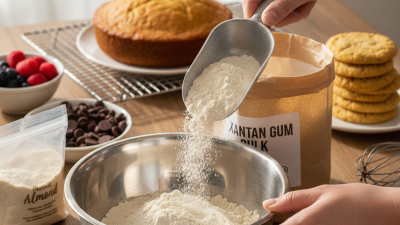
Top 10 Uses of Xanthan Gum Bulk for Global Buyers?
Xanthan Gum Bulk is a versatile ingredient, used widely across various industries. This polysaccharide is produced through fermentation, making it safe for numerous applications. From food production to cosmetics, its properties enhance texture and stability.
In the food sector, Xanthan Gum Bulk acts as a thickener and stabilizer. It improves the consistency of sauces, salad dressings, and gluten-free baked goods. Many consumers appreciate its ability to provide a desirable mouthfeel. In personal care products, it helps maintain the stability of lotions and creams.
However, not all uses are straightforward. Some manufacturers may neglect proper blending, leading to clumping. This oversight can compromise the product's effectiveness. Understanding the nuances of Xanthan Gum Bulk can lead to better outcomes. Knowing its ideal applications is crucial for buyers. Enhanced product quality is the ultimate goal, but challenges remain.
Top Applications of Xanthan Gum in Food Industry for Buyers
Xanthan gum is a versatile ingredient widely used in the food industry. This thickening agent stabilizes sauces, salad dressings, and soups. It keeps ingredients from separating and improves texture. Many food manufacturers prefer xanthan gum due to its ability to enhance mouthfeel. This is crucial for products like low-fat or gluten-free foods, where texture can be compromised.
Using xanthan gum in baked goods can improve moisture retention. It aids in creating elasticity and structure, which is particularly beneficial in gluten-free recipes. When adding xanthan gum, start with small amounts. Too much can lead to a gummy texture. Consider experimenting with different quantities to find the perfect balance.
For best results, mix xanthan gum with the dry ingredients before adding liquids. This ensures even distribution. If the mixture becomes too thick, adding more liquid can help adjust the consistency. Keep in mind that xanthan gum is very potent, so a little goes a long way. Overcoming challenges with this ingredient may require some practice and adjustments.
Top 10 Uses of Xanthan Gum in Food Industry
Xanthan gum is a versatile ingredient widely used in the food industry. This chart illustrates the various applications of xanthan gum, highlighting its most common uses as a thickening agent, stabilizer, and emulsifier, among others.
Xanthan Gum's Role in Personal Care and Cosmetic Products
Xanthan gum is increasingly popular in personal care and cosmetic formulations. It acts as a thickening agent, enhancing the texture of products. Its unique viscosity properties make it ideal for lotions and creams. In the personal care market, the demand for xanthan gum is projected to grow by 5.7% between 2021 and 2026, according to industry reports.
In cosmetics, xanthan gum helps stabilize emulsions. This is crucial for products like moisturizers and serums. It prevents separation, ensuring uniform product application. Studies indicate that formulations containing xanthan gum retain moisture better, providing longer-lasting hydration for the skin. Many consumers prefer products that use biodegradable ingredients, aligning with sustainable practices.
However, the use of xanthan gum isn't without challenges. Some sensitive skin types may react adversely. Patch testing is always recommended. The sourcing of xanthan gum can also present limitations. Quality and purity can vary between suppliers. Buyers should prioritize reputable sources to ensure product safety and efficacy.
Top 10 Uses of Xanthan Gum Bulk for Global Buyers
| Application |
Function |
Benefits |
| Moisturizers |
Thickening Agent |
Improves texture and stability |
| Sunscreens |
Emulsion Stabilizer |
Enhances SPF efficacy |
| Shampoos |
Thickening Agent |
Improves application and feel |
| Conditioners |
Stabilizer |
Enhances conditioning properties |
| Makeup Products |
Texture Enhancer |
Improves application and wear |
| Facial Masks |
Thickening Agent |
Provides a smooth application |
| Bath Products |
Suspending Agent |
Maintains dispersion of ingredients |
| Aromatherapy Products |
Gel-forming Agent |
Enhances scent release |
| Lip Products |
Thickener |
Provides a creamy texture |
| Body Washes |
Thickening Agent |
Improves lather and feel |
Innovative Uses of Xanthan Gum in Pharmaceuticals
Xanthan gum has made significant strides in the pharmaceutical industry. Its unique properties allow it to function as a thickening agent, stabilizer, and emulsifier in various formulations. This biopolymer is crucial in drug delivery systems, enhancing the efficacy of active ingredients. Many pharmaceutical companies harness its ability to improve texture and stability in liquid medications.
In topical formulations, xanthan gum provides a smooth feel. It helps in creating gels and creams that adhere well to the skin. The stability of products increases significantly with its inclusion. This aspect has led to innovative applications in wound care. Xanthan gum helps maintain moisture and promotes healing.
Understanding how to use xanthan gum effectively can be challenging. Start with small amounts in formulations. Gradually adjust the quantity based on the desired consistency. Experimentation is key for optimal results. Poor mixing can lead to lumps, affecting the product's quality. Always conduct a stability test after formulation adjustments. This step ensures that your product remains effective over time.
Benefits of Using Xanthan Gum in Agricultural Products
Xanthan gum offers significant benefits in agricultural products. This thickening agent is widely used to enhance soil health and improve water retention. By incorporating xanthan gum into soil, farmers can retain moisture more effectively. This is crucial in regions prone to drought.
Another key advantage of xanthan gum is its role in pesticide formulations. It can stabilize active ingredients, ensuring even distribution in agricultural sprays. This improves efficacy and minimizes waste. Additionally, xanthan gum can boost the adherence of these products to plant surfaces. This enhances protection against pests while reducing the need for multiple treatments.
The use of xanthan gum in plant-based fertilizers also promotes nutrient absorption. It helps create a gel-like consistency that ensures nutrients are available for longer periods. However, some farmers may find it challenging to adjust their practices. A lack of knowledge about the correct quantities can lead to inconsistent results. Understanding these details is vital for maximizing benefits in agricultural practices.
Xanthan Gum as a Thickening Agent in Industrial Applications
Xanthan gum is widely recognized as a powerful thickening agent in various industrial applications. Its unique ability to increase viscosity makes it an invaluable ingredient in products from food items to personal care and pharmaceuticals. According to a report by Grand View Research, the global xanthan gum market was valued at approximately USD 1.04 billion in 2022, highlighting its significance in modern formulations.
In food manufacturing, xanthan gum not only thickens but also stabilizes emulsions. Its effectiveness is particularly notable in gluten-free products, where it mimics the texture that gluten provides. A study published in the Journal of Food Science found that using xanthan gum improved the texture of gluten-free dough, resulting in products that are closer to traditional baked goods. This demonstrates the gum's importance in meeting consumer demands for both quality and health.
Xanthan gum is also gaining traction in cosmetics and industrial formulations. In personal care products, it serves as a thickener, enhancing the feel and application of creams and lotions. Its bio-compatibility makes it safe for skin contact. However, sourcing high-quality xanthan gum can be challenging. Not all suppliers maintain the same standards, leading to variations in quality and performance. Ensuring consistency in application is crucial for industries relying on this essential thickening agent.